
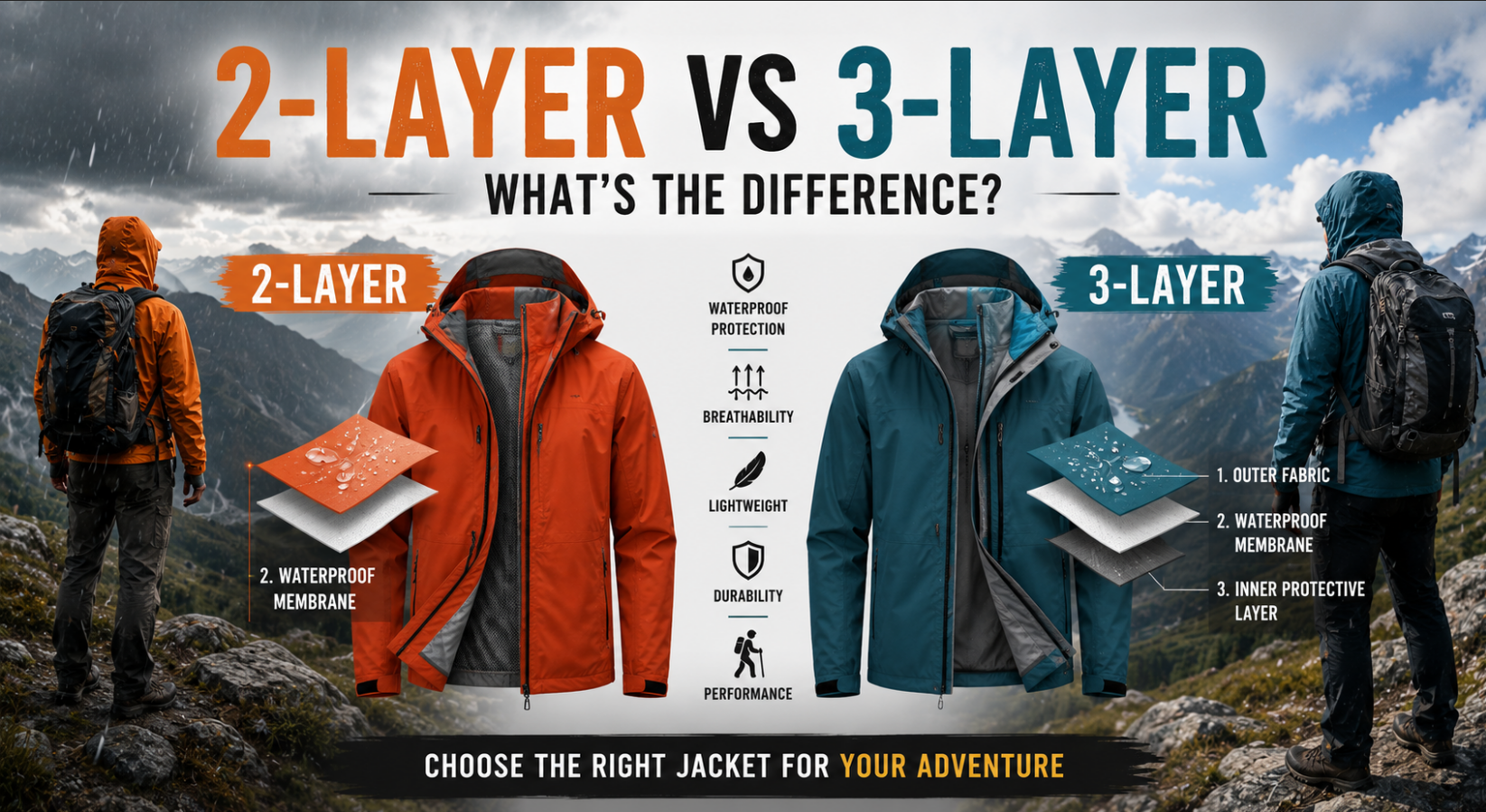
2-Layer vs 3-Layer Jackets: What’s the Difference?
May 10, 2026
When shopping for a waterproof jacket, you will often see terms like “2-layer” and “3-layer” construction. For many outdoor beginners, these technical names can feel confusing.
Do more layers automatically mean better performance?
Is a 3-layer jacket always worth the higher price?
Which type is best for hiking, travel, or everyday outdoor use?
In this guide, we explain the real difference between 2-layer vs 3-layer jackets, including waterproof protection, comfort, breathability, durability, and the best use cases for each type.
What Does “Layer Construction” Mean?
Waterproof jackets are made using multiple fabric layers combined together to improve weather protection and comfort.
These layers usually include:
- Outer fabric
- Waterproof membrane
- Inner lining or protective layer
The way these layers are combined affects:
- Weight
- Breathability
- Durability
- Comfort
- Price
Understanding jacket construction helps you choose the right outdoor gear for your needs.
What Is a 2-Layer Jacket?
A 2-layer jacket combines:
- An outer fabric
- A waterproof membrane bonded to the inside
Then, a separate loose inner lining is added for comfort.
Advantages of 2-Layer Jackets
More Comfortable for Casual Wear
The inner lining feels softer and more comfortable against the skin.
More Affordable
2-layer jackets are usually less expensive than 3-layer jackets.
Good for Daily Use
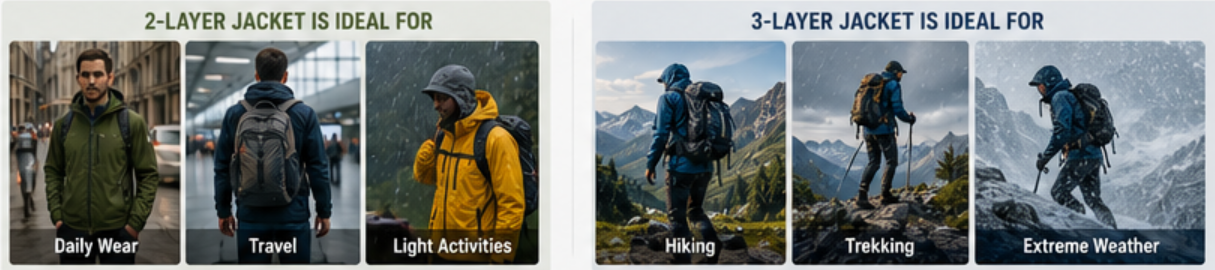
They work well for:
- City commuting
- Travel
- Casual outdoor activities
- Light hiking
Disadvantages of 2-Layer Jackets
Less Breathable
The separate lining can trap more heat and moisture.
Heavier and Bulkier
2-layer jackets are often less compact for packing.
Lower Durability
They are not ideal for extreme outdoor conditions or long mountain trips.
What Is a 3-Layer Jacket?
A 3-layer jacket combines:
- Outer fabric
- Waterproof membrane
- Inner protective layer
All three layers are bonded together into one fabric system.
This creates a lighter, more technical performance jacket.
Advantages of 3-Layer Jackets
Better Breathability
3-layer jackets release moisture more efficiently during active movement.
Lighter Weight
Because there is no loose inner lining, the jacket feels lighter and packs smaller.
More Durable
3-layer construction is designed for demanding outdoor conditions.
Better for Mountain Activities
Ideal for:
- Hiking
- Trekking
- Climbing
- Ski touring
- Long outdoor adventures
Disadvantages of 3-Layer Jackets
Higher Price
Technical materials and construction increase cost.
Less Casual Comfort
Some 3-layer shells feel more technical or stiff compared to softer 2-layer jackets.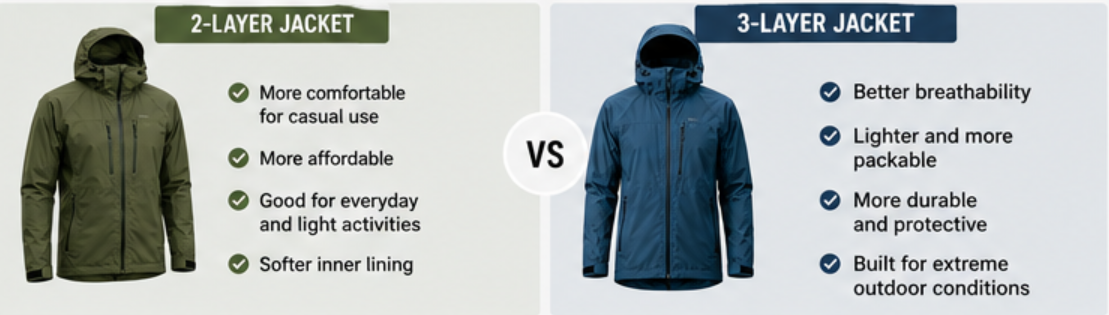
2-Layer vs 3-Layer Jacket: Key Differences
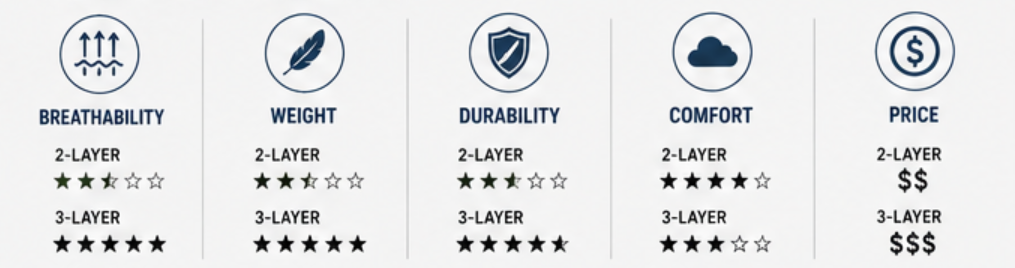
| Feature | 2-Layer Jacket | 3-Layer Jacket |
|---|---|---|
| Comfort | Softer casual feel | Technical performance feel |
| Breathability | Moderate | High |
| Weight | Heavier | Lighter |
| Packability | Bulkier | More compact |
| Durability | Moderate | High |
| Best Use | Daily wear & travel | Hiking & mountain sports |
| Price | Lower | Higher |
If you mainly do:
- Weekend hiking
- Casual outdoor trips
- Travel
A quality 2-layer jacket is usually enough.
However, for:
- Mountain hiking
- Long trekking trips
- Frequent outdoor adventures
- Harsh weather
A 3-layer jacket performs significantly better.
Breathability Matters More Than Most People Think
Many people only focus on waterproof ratings when buying jackets.
But during hiking or active movement, trapped sweat can make you uncomfortable quickly.
A breathable jacket helps:
- Release body heat
- Reduce moisture buildup
- Improve comfort during movement
This is why serious outdoor users often prefer 3-layer jackets.
Which Jacket Is Better for Travel?
For travel, lightweight packability matters.
A lightweight 3-layer shell:
- Packs smaller
- Dries faster
- Handles changing weather better
However, if your travel is mostly urban or casual, a comfortable 2-layer jacket may feel more versatile.
Which Jacket Lasts Longer?
In general:
- 3-layer jackets are more durable
- They resist abrasion better
- They handle heavy outdoor use more effectively
For frequent hikers and outdoor travelers, a 3-layer jacket can be a better long-term investment.
How to Choose the Right Jacket for Your Needs
Choose a 2-Layer Jacket If:
✔ You want casual comfort
✔ You mainly use it for travel or city wear
✔ You hike occasionally
✔ Budget matters more
Choose a 3-Layer Jacket If:
✔ You hike frequently
✔ You need lightweight performance
✔ You want better breathability
✔ You spend long hours outdoors
✔ You face difficult weather conditions
Final Thoughts
Choosing between a 2-layer vs 3-layer jacket depends on how you use your outdoor gear.
For casual outdoor use, travel, and daily wear, 2-layer jackets offer comfort and affordability.
For hiking, mountain adventures, and serious outdoor performance, 3-layer jackets provide better breathability, durability, and weather protection.
The best waterproof jacket is not always the most expensive one — it is the one that matches your real outdoor needs.