
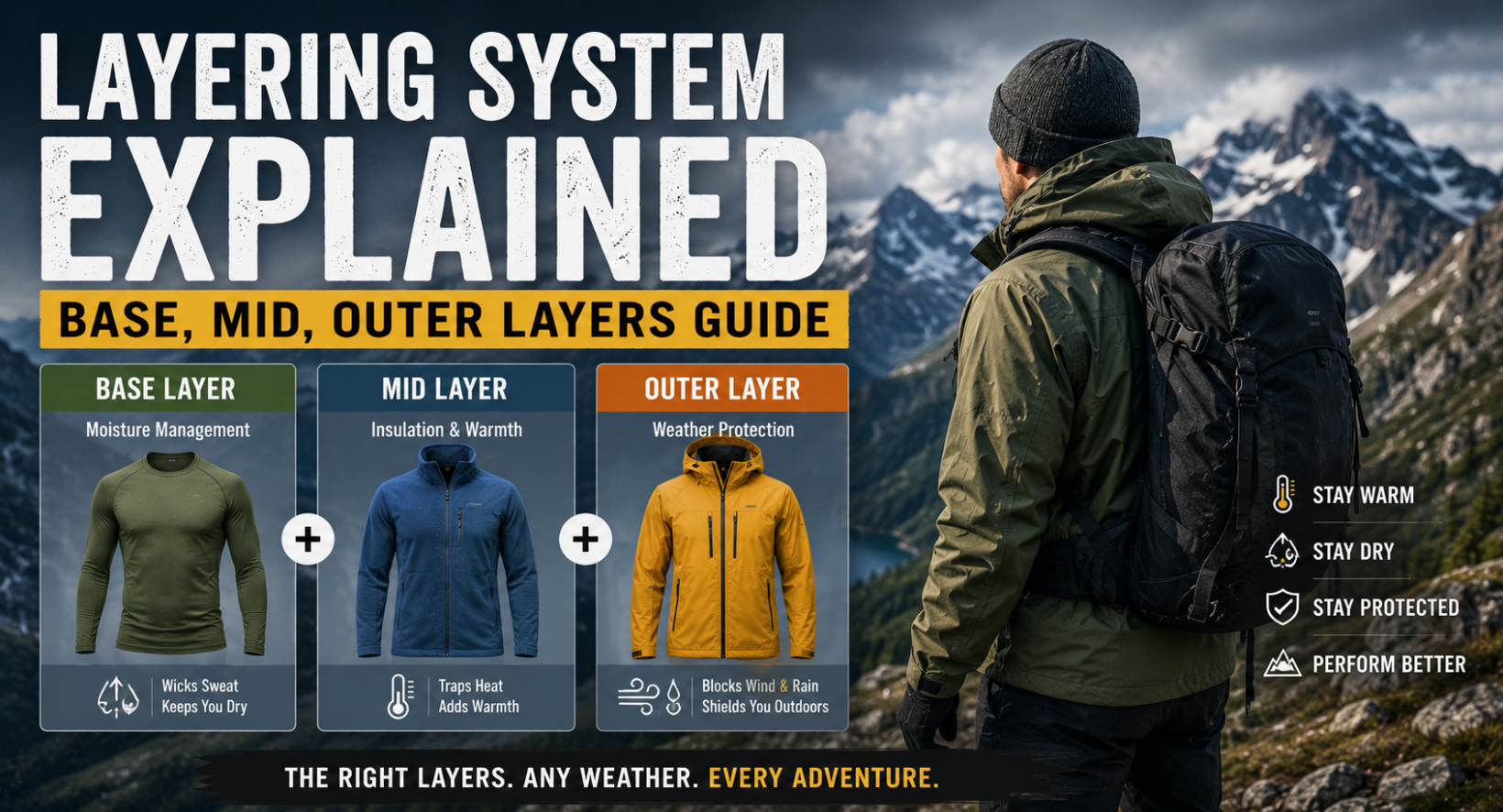
Layering System Explained: Base, Mid & Outer Layers Guide
May 12, 2026
If you’ve ever felt too cold, too hot, or soaked during an outdoor trip, the problem may not be the weather — it may be how you dressed.
Outdoor comfort is not just about wearing a thick jacket. Professional hikers, trekkers, and outdoor travelers use a layering system to stay comfortable in changing weather conditions.
But what exactly is a layering system?
Why do outdoor experts wear multiple thin layers instead of one heavy coat?
And how do base layers, mid layers, and outer layers actually work together?
In this guide, we explain the complete outdoor layering system and how to layer clothes properly for hiking, travel, winter weather, and outdoor adventures.
What Is a Layering System?
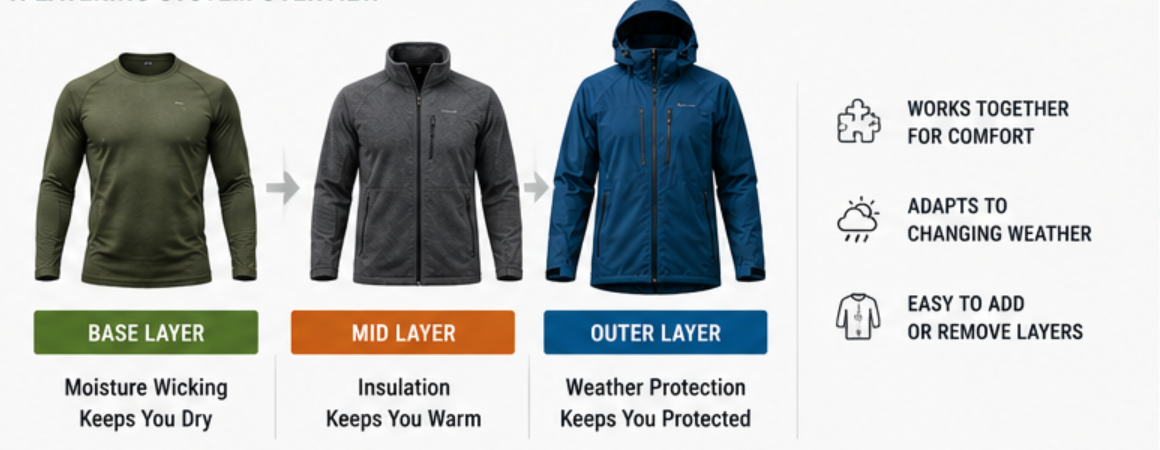
A layering system is a clothing strategy that uses multiple layers to regulate:
- Body temperature
- Moisture management
- Wind protection
- Rain protection
- Overall outdoor comfort
Instead of relying on one thick jacket, layering allows you to:
✔ Adjust to changing weather
✔ Stay dry during movement
✔ Improve comfort outdoors
✔ Add or remove layers easily
This system is widely used in:
- Hiking
- Camping
- Trekking
- Skiing
- Travel
- Mountaineering
The 3 Main Layers Explained
A proper layering system usually includes:
- Base Layer
- Mid Layer
- Outer Layer
Each layer has a different purpose.
Base Layer: Moisture Management
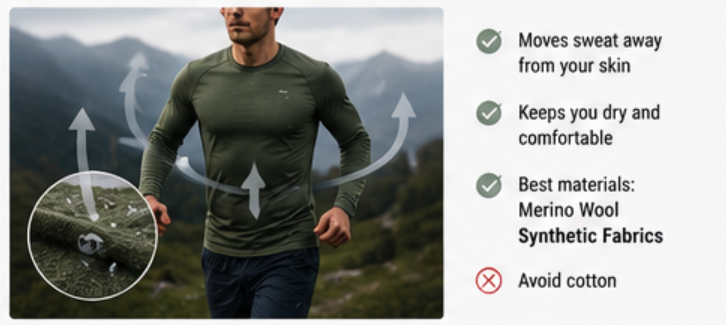
The base layer sits directly against your skin.
Its main job is to:
✔ Move sweat away from the body
✔ Keep skin dry
✔ Improve comfort during movement
Why Base Layers Matter
Even in cold weather, your body sweats during activity.
If moisture stays trapped against your skin:
- You feel cold faster
- Clothing becomes uncomfortable
- Body temperature drops
A quality base layer helps prevent this.
Best Base Layer Materials
Merino Wool
Advantages:
✔ Soft and comfortable
✔ Natural odor resistance
✔ Excellent temperature regulation
Synthetic Fabrics
Advantages:
✔ Lightweight
✔ Fast drying
✔ Affordable
Avoid cotton as a base layer because it absorbs moisture and dries slowly.
Mid Layer: Insulation & Warmth
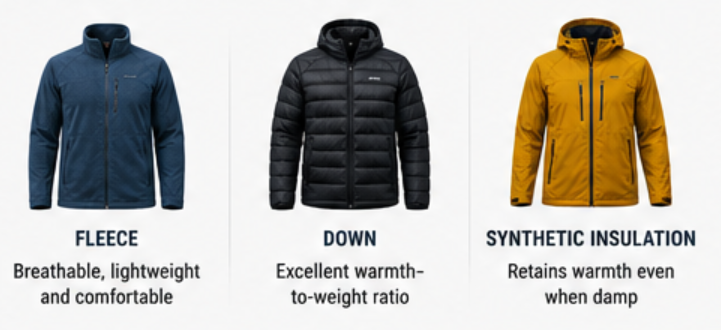
The mid layer traps body heat to keep you warm.
This layer is responsible for insulation.
Common Mid Layer Options
Fleece Jackets
Good for:
- Hiking
- Cool weather
- Casual outdoor use
Advantages:
✔ Breathable
✔ Lightweight
✔ Comfortable
Down Jackets
Good for:
- Cold weather
- Winter travel
Advantages:
✔ Excellent warmth-to-weight ratio
✔ Highly compressible
However, down loses insulation performance when wet.
Synthetic Insulation Jackets
Good for:
- Wet weather conditions
- Active outdoor sports
Advantages:
✔ Retains warmth when damp
✔ Better moisture resistance
Outer Layer: Weather Protection
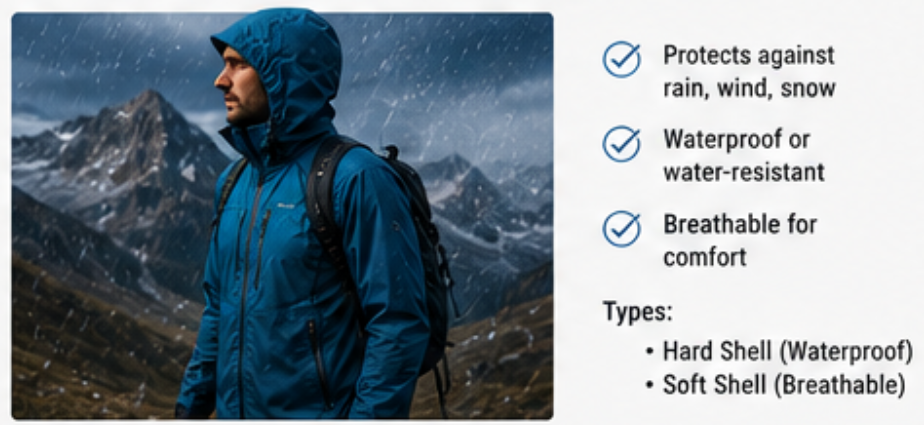
The outer layer protects you from:
✔ Rain
✔ Wind
✔ Snow
✔ Harsh outdoor conditions
This layer is often called a shell jacket.
Types of Outer Layers
Waterproof Shell Jackets
Best for:
- Rainy weather
- Mountain hiking
- Harsh outdoor environments
Features:
✔ Waterproof membranes
✔ Windproof protection
✔ Breathability
Softshell Jackets
Best for:
- Mild outdoor conditions
- Active movement
Advantages:
✔ More flexible
✔ More breathable
✔ Comfortable for hiking
However, softshells are usually less waterproof than hard shells.
Why Layering Works Better Than One Heavy Jacket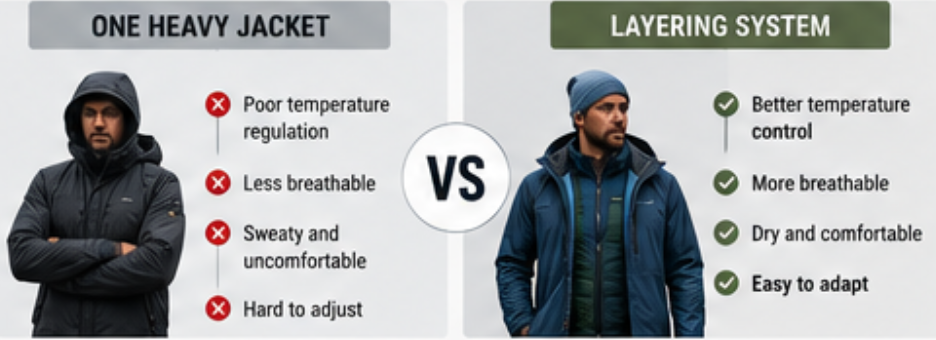
Many beginners think one thick jacket is enough.
But layering works better because it provides:
✔ Better temperature control
✔ More flexibility
✔ Improved moisture management
✔ Better comfort during changing conditions
You can easily:
- Remove layers when warm
- Add insulation when cold
- Adjust to weather changes quickly
How to Layer Clothes for Hiking
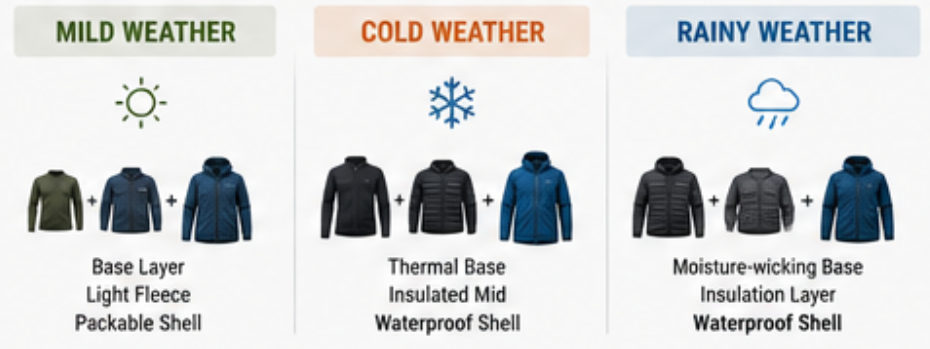
Mild Weather
- Lightweight base layer
- Light fleece
- Packable rain shell
Cold Weather
- Thermal base layer
- Insulated mid layer
- Waterproof outer shell
Rainy Weather
- Moisture-wicking base layer
- Breathable insulation
- Waterproof jacket
Common Layering Mistakes
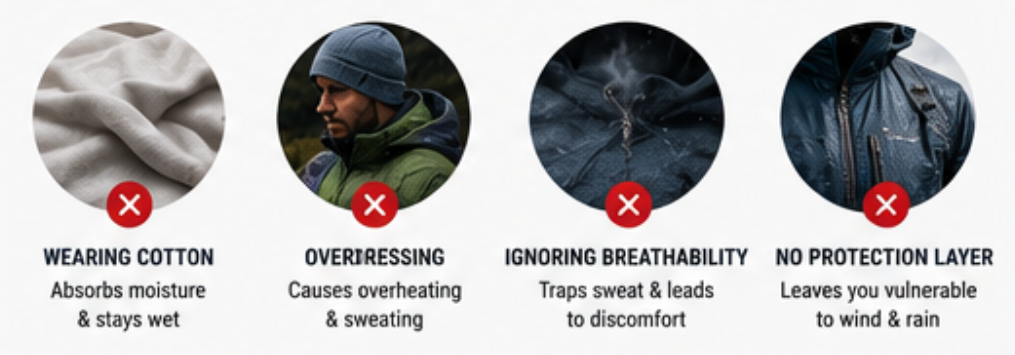
Wearing Cotton
Cotton absorbs sweat and dries slowly.
This can make you cold and uncomfortable outdoors.
Overdressing
Too many heavy layers can cause overheating and excessive sweating.
Ignoring Breathability
Breathability matters just as much as warmth.
Using Non-Waterproof Outer Layers
In wet weather, your outer layer should protect against rain and wind.
Layering Tips for Travel
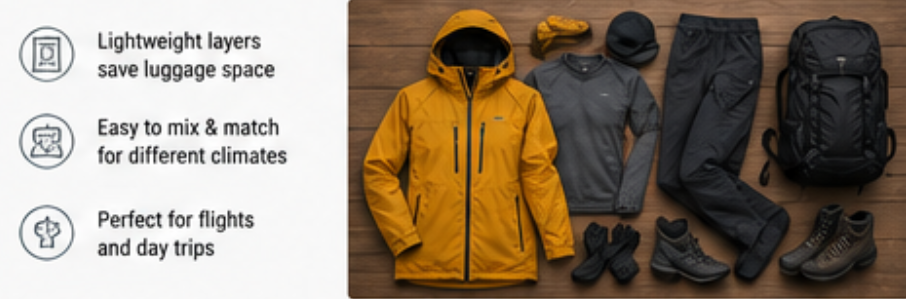
A layering system is also useful for travel because it:
✔ Reduces packing bulk
✔ Adapts to different climates
✔ Improves comfort during flights and outdoor activities
Many travelers prefer lightweight layers instead of carrying heavy winter jackets.
Choosing the Right Layering System
The best layering system depends on:
- Weather conditions
- Activity level
- Personal comfort
- Outdoor environment
A mountain hiking setup may be very different from an urban travel setup.
The goal is always the same:
✔ Stay dry
✔ Stay warm
✔ Stay comfortable
Why Outdoor Professionals Use Layering Systems
Professional hikers and mountaineers rely on layering because weather changes quickly outdoors.
A flexible clothing system allows them to:
- Adapt fast
- Prevent overheating
- Manage moisture
- Stay protected during long outdoor exposure
This is why layering is considered one of the most important outdoor clothing principles.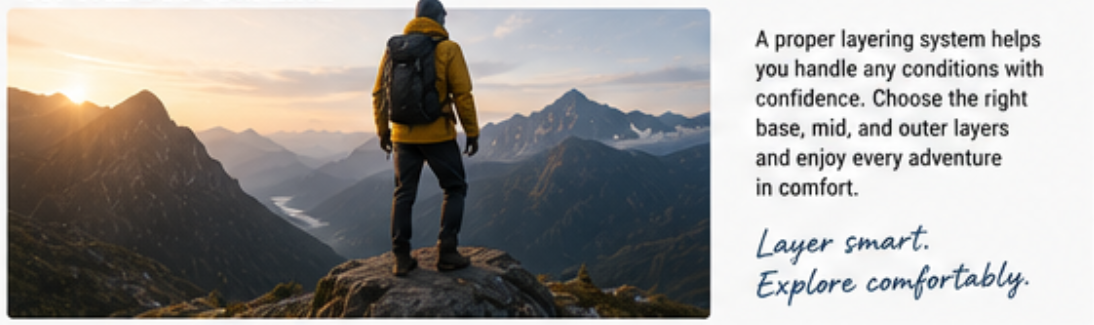
The Bottom Line
Understanding how to layer clothes properly can completely improve your outdoor experience.
A good layering system helps you:
✔ Stay comfortable
✔ Handle changing weather
✔ Reduce sweat buildup
✔ Stay warm without overheating
Instead of relying on one heavy jacket, combining the right base layer, mid layer, and outer layer creates a more versatile and effective outdoor clothing system.
Whether you hike mountains, travel in winter, or simply enjoy outdoor adventures, mastering layering is one of the best investments you can make for comfort and performance.