
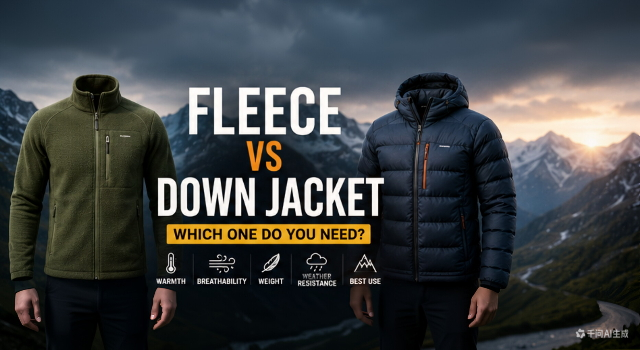
Fleece vs Down Jacket: Which One Do You Need?
May 13, 2026
When building an outdoor layering system, one of the most common questions is:
Should you choose a fleece jacket or a down jacket?
Both are designed to keep you warm, but they work very differently in outdoor conditions.
Some hikers prefer fleece because it stays breathable during movement. Others choose down because it offers incredible warmth with very little weight.
So which one is actually better?
The answer depends on:
- Weather conditions
- Activity level
- Moisture exposure
- Travel needs
- Personal comfort
In this guide, we compare fleece vs down jackets in detail to help you choose the best insulation layer for hiking, travel, winter weather, and outdoor adventures.
What Is a Fleece Jacket?
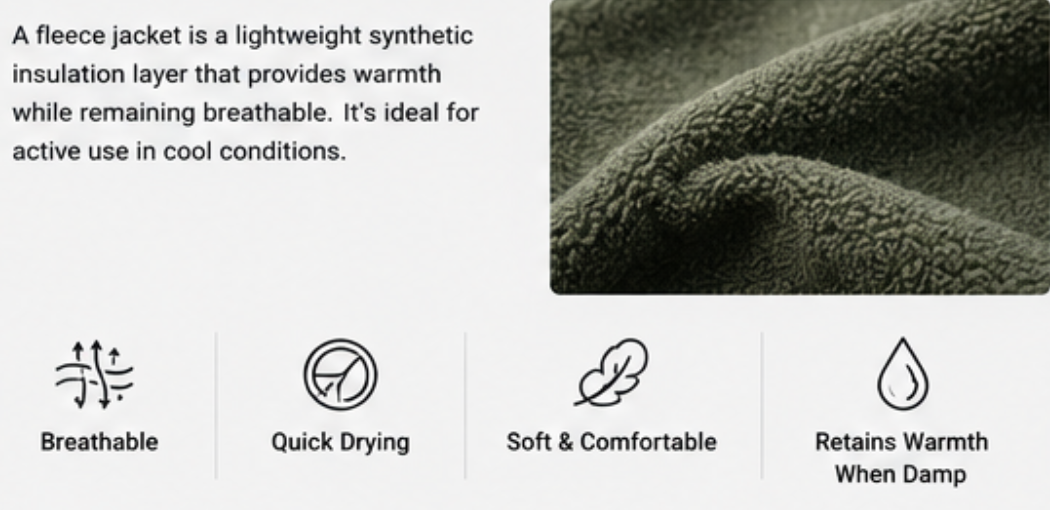
A fleece jacket is a lightweight synthetic insulation layer designed to provide warmth while remaining breathable.
Fleece is usually made from polyester fibers that trap warm air while allowing moisture and heat to escape.
Fleece jackets are popular for:
- Hiking
- Camping
- Casual outdoor wear
- Layering systems
- Cool weather activities
Advantages of Fleece Jackets
Excellent Breathability
One of the biggest advantages of fleece is breathability.
During hiking or active movement, fleece helps:
✔ Release body heat
✔ Reduce sweat buildup
✔ Improve comfort during activity
This makes fleece ideal for active outdoor use.
Performs Better When Wet
Unlike down insulation, fleece still provides warmth even when damp.
This makes it useful in:
- Wet weather
- Humid environments
- Rainy hiking conditions
Comfortable & Flexible
Fleece jackets are:
✔ Soft
✔ Comfortable
✔ Easy to move in
They are often more comfortable for casual everyday wear than technical insulation jackets.
Disadvantages of Fleece Jackets
Less Warm Than Down
Fleece provides moderate insulation but cannot match the warmth-to-weight ratio of down.
Bulkier for Packing
Fleece jackets usually take up more backpack space compared to down jackets.
Less Wind Resistant
Most fleece jackets allow wind to pass through easily unless paired with an outer shell.
What Is a Down Jacket?
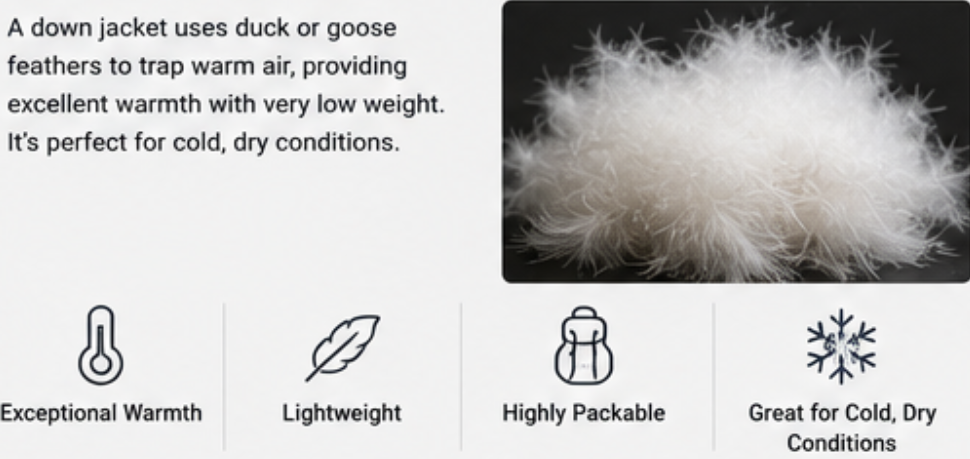
A down jacket uses insulation made from duck or goose feathers.
Down clusters trap air extremely efficiently, creating excellent warmth with very low weight.
Down jackets are widely used for:
- Cold-weather hiking
- Winter travel
- Mountaineering
- Snow sports
- Outdoor layering systems
Advantages of Down Jackets
Exceptional Warmth-to-Weight Ratio
Down provides excellent insulation while remaining lightweight.
This is why many hikers and travelers prefer down jackets for cold environments.
Highly Packable
Down jackets compress easily and take up minimal luggage space.
Perfect for:
- Backpacking
- Travel
- Emergency insulation
Great for Cold, Dry Conditions
Down performs extremely well in:
- Winter weather
- Snowy climates
- Cold mountain environments
Disadvantages of Down Jackets
Loses Performance When Wet
Traditional down insulation loses warmth when soaked with moisture.
Wet down becomes:
❌ Heavy
❌ Clumped
❌ Less insulating
Some modern jackets use water-resistant treated down, but moisture still affects performance.
Less Breathable During Activity
Down traps heat very efficiently, which can cause overheating during intense movement.
Fleece vs Down Jacket: Key Differences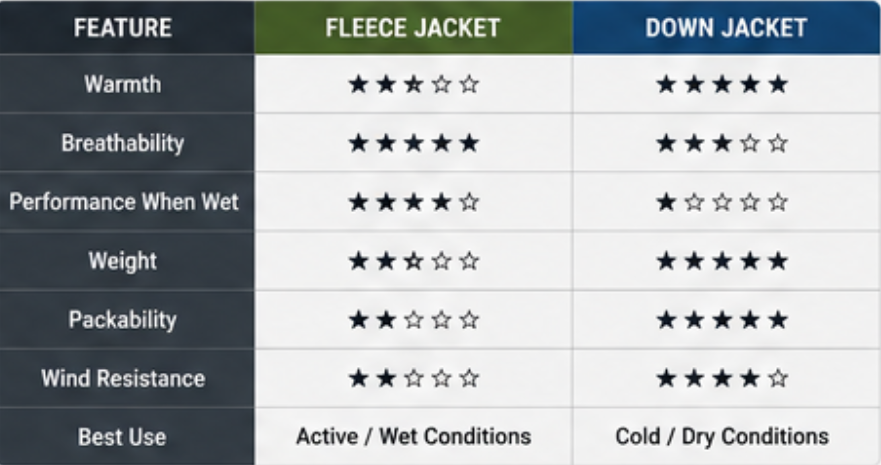
| Feature | Fleece Jacket | Down Jacket |
|---|---|---|
| Warmth | Moderate | Very High |
| Breathability | Excellent | Moderate |
| Performance When Wet | Good | Poor |
| Weight | Moderate | Very Light |
| Packability | Bulkier | Highly Packable |
| Wind Resistance | Low | Better |
| Best Use | Active movement | Cold weather insulation |
Which Jacket Is Better for Hiking?
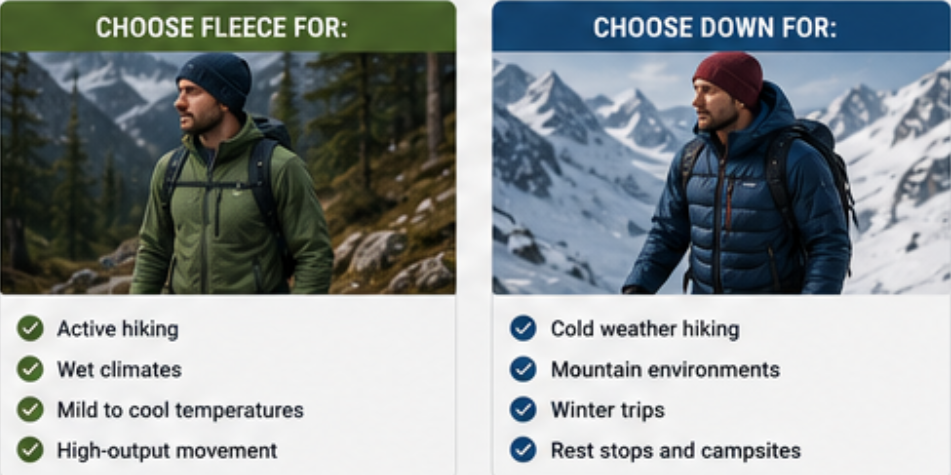
The answer depends on hiking conditions.
Choose Fleece for:
✔ Active hiking
✔ Wet climates
✔ Mild to cool temperatures
✔ High-output movement
Fleece works especially well during:
- Fast hiking
- Trail walking
- Layering in changing weather
Choose Down for:
✔ Cold weather hiking
✔ Mountain environments
✔ Winter trips
✔ Rest stops and campsites
Down is better when maximum warmth matters.
Which Jacket Is Better for Travel?
For travel, down jackets are often more convenient because they:
✔ Compress easily
✔ Weigh less
✔ Pack smaller
However, fleece may feel more versatile for:
- Casual daily wear
- Mixed weather
- Urban travel
Which Jacket Works Better in Rain?
Fleece is generally safer in wet weather.
Because fleece maintains insulation even when damp, it performs more reliably during:
- Rain
- Humidity
- Wet outdoor conditions
Down jackets usually need a waterproof outer shell for protection.
Why Many Outdoor Professionals Use Both
Many experienced hikers carry both fleece and down layers.
Why?
Because they serve different purposes.
Fleece:
Best during movement
Down:
Best during rest or cold exposure
This combination creates a more flexible outdoor layering system.
How to Combine Fleece & Down in a Layering System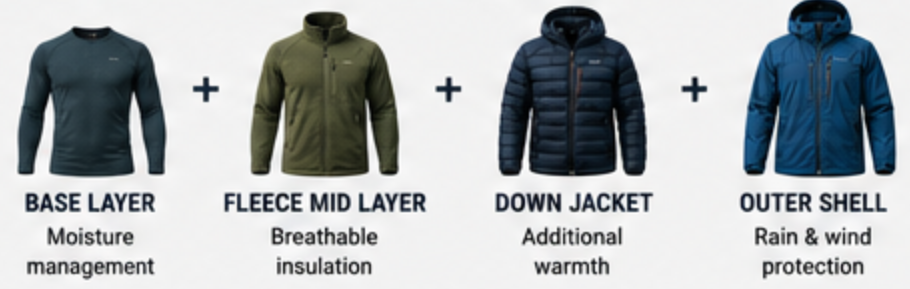
A common cold-weather setup looks like this:
Base Layer
Moisture management
Fleece Mid Layer
Breathable active insulation
Down Jacket
Additional warmth during rest
Waterproof Shell
Rain and wind protection
This setup helps balance:
✔ Warmth
✔ Breathability
✔ Weather protection
Which Jacket Should Beginners Choose?
If you only want one insulation layer:
Choose Fleece If:
✔ You hike actively
✔ You experience wet weather
✔ You want versatility
✔ Budget matters more
Choose Down If:
✔ You prioritize warmth
✔ You travel often
✔ You need lightweight packing
✔ You face cold winter conditions

The Bottom Line
Both fleece and down jackets are excellent outdoor insulation layers — they simply serve different purposes.
Fleece performs better during movement and wet conditions because it stays breathable and maintains warmth when damp.
Down provides unmatched warmth and packability, making it ideal for cold-weather travel and winter outdoor adventures.
The best choice depends on:
- Your climate
- Activity level
- Outdoor environment
- Personal comfort preferences
For many outdoor enthusiasts, the ideal solution is not fleece or down — but knowing when to use each one.