
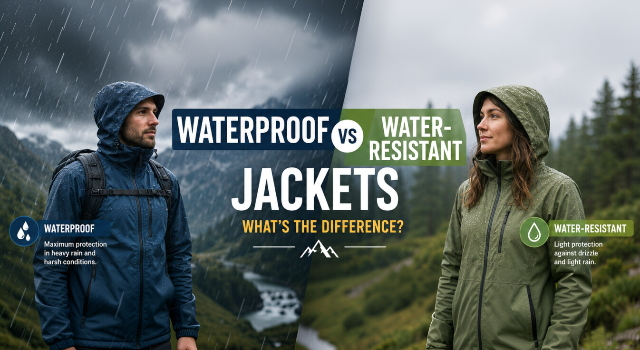
Waterproof vs Water-Resistant Jackets: What's the Difference?
Jun 03, 2026
When shopping for outdoor apparel, terms like waterproof and water-resistant often appear on product labels. While they may sound similar, they provide different levels of protection against moisture and weather.
Choosing the right jacket depends on where you go, how often you encounter rain, and what activities you enjoy.
Let's break down the differences.
What Is a Water-Resistant Jacket?
A water-resistant jacket is designed to repel light moisture and drizzle.
These jackets typically feature:
- Tightly woven fabrics
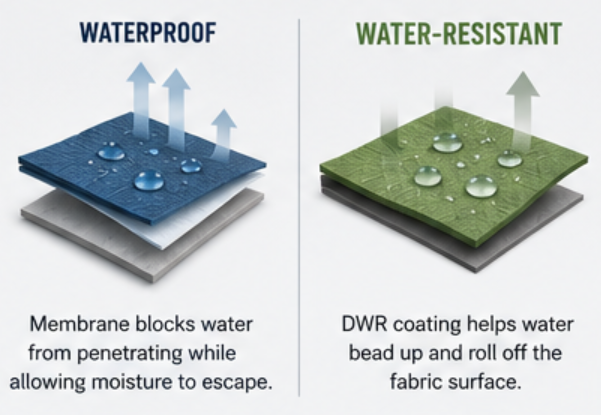
- Durable Water Repellent (DWR) coating
- Lightweight construction
- High breathability
Water-resistant jackets can handle brief exposure to light rain but are not intended for prolonged wet conditions.
Best Uses for Water-Resistant Jackets
- Daily commuting
- Travel
- Walking
- Mild hiking
- Dry climates
- Light drizzle
For many everyday activities, water-resistant protection is often sufficient.
What Is a Waterproof Jacket?
A waterproof jacket provides a much higher level of weather protection.
These jackets usually include:
- Waterproof membranes
- Sealed or taped seams
- Waterproof zippers
- Storm hoods
Waterproof jackets prevent water from penetrating the fabric, even during heavy rain or extended exposure.
Best Uses for Waterproof Jackets
- Mountain hiking
- Trekking
- Camping
- Backpacking
- Skiing
- Rainy climates
When weather conditions are unpredictable, waterproof jackets offer greater reliability.
Waterproof vs Water-Resistant: Key Differences
| Feature | Water-Resistant | Waterproof |
|---|---|---|
| Rain Protection | Light rain | Heavy rain |
| Breathability | Excellent | Good to excellent |
| Weight | Lightweight | Lightweight to moderate |
| Comfort | Excellent | Good |
| Weather Protection | Basic | Maximum |
| Cost | Lower | Higher |
| Best For | Daily use | Outdoor adventures |
1. Performance in Rain
The biggest difference is how much water the jacket can withstand.
Water-Resistant Jackets
Suitable for:
- Light showers
- Mist
- Brief rain exposure
Eventually, water will penetrate the fabric during continuous rain.
Waterproof Jackets
Designed for:
- Heavy rain
- Storms
- Extended outdoor exposure
They provide complete protection when properly constructed.
Winner: Waterproof
2. Breathability
Water-resistant jackets are often more breathable because they use lighter fabrics and fewer protective layers.
Benefits include:
- Better airflow
- Reduced overheating
- Increased comfort during activity
Waterproof jackets have improved significantly in recent years but may still feel warmer during high-output activities.
Winner: Water-Resistant
3. Weight and Packability
Travelers and casual users often prefer lightweight outerwear.
Water-resistant jackets are generally:
- Lighter
- More compact
- Easier to pack
Waterproof jackets may include additional layers and construction features that increase weight slightly.
Winner: Water-Resistant
4. Weather Protection
If protection is your top priority, waterproof jackets are the clear winner.
Advantages include:
- Full rain protection
- Windproof performance
- Better durability in severe weather
For mountain environments and long outdoor adventures, waterproof jackets provide peace of mind.
Winner: Waterproof
5. Cost Considerations
Waterproof jackets typically require advanced fabrics and construction techniques.
As a result:
- Water-resistant jackets are usually more affordable.
- Waterproof jackets often represent a larger investment.
For occasional outdoor use, a water-resistant jacket may provide better value.
Winner: Water-Resistant
Which Jacket Should You Choose?
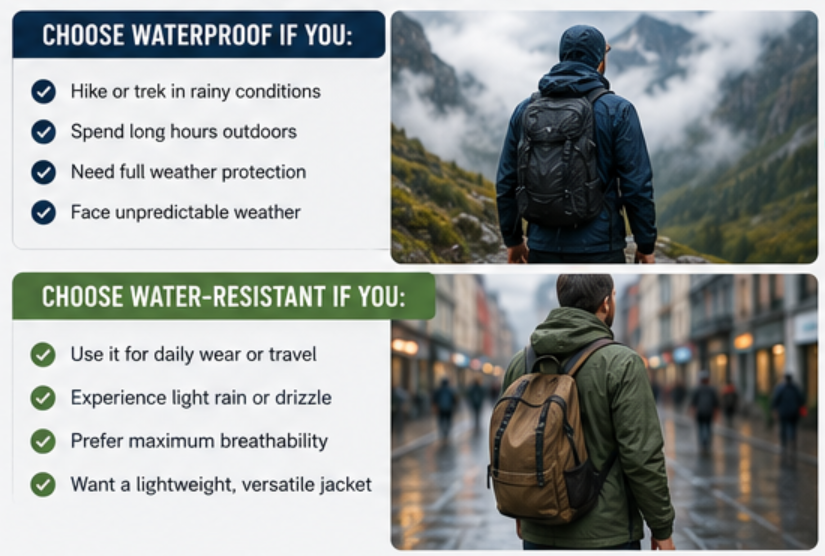
Choose a Water-Resistant Jacket If:
- You mainly use it for daily wear.
- You travel frequently.
- You experience light rain occasionally.
- Breathability and comfort are priorities.
Choose a Waterproof Jacket If:
- You hike regularly.
- You spend long periods outdoors.
- You encounter heavy rain.
- Weather protection is essential.
Understanding DWR Coating
Many water-resistant jackets rely on a Durable Water Repellent (DWR) finish.
DWR helps water bead up and roll off the fabric surface. However, over time the coating can wear down and may require reapplication to maintain performance.
Even some waterproof jackets use DWR as an additional layer of protection.
Choosing the Right Protection for Your Adventures
The choice between waterproof and water-resistant jackets depends on how and where you plan to use them.
For everyday activities and light weather, a water-resistant jacket offers comfort, breathability, and convenience. For demanding outdoor conditions, a waterproof jacket delivers the protection needed to stay dry and comfortable.
Understanding these differences helps ensure you select the right outerwear for every journey.
CTA
Looking for custom waterproof and water-resistant jacket manufacturing solutions?
Contact us today to develop high-performance outdoor apparel tailored to your brand's market and customer needs