
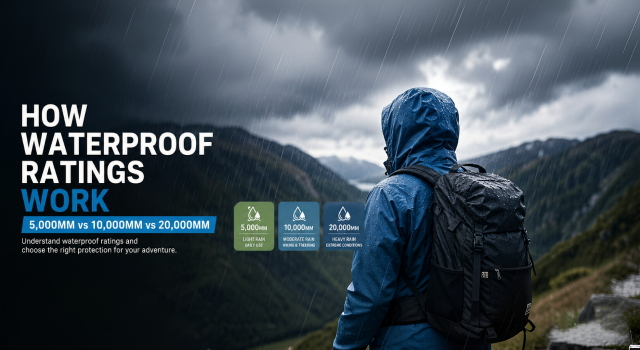
How Waterproof Ratings Work: 5,000mm vs 10,000mm vs 20,000mm Explained
Jun 13, 2026
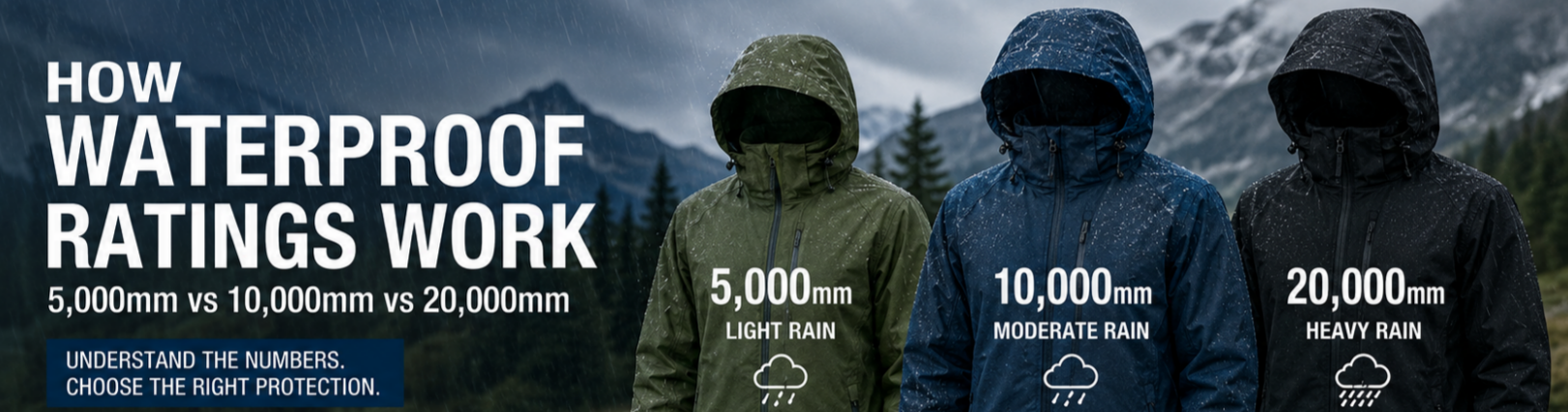 When shopping for outdoor jackets, you'll often encounter waterproof ratings such as 5,000mm, 10,000mm, or even 20,000mm. These numbers can seem confusing, especially if you're new to outdoor gear.
Does a higher number always mean a better jacket? Is a 20,000mm waterproof jacket necessary for everyday use? And what waterproof rating is best for hiking, traveling, or working outdoors?
If you're currently looking for a waterproof jacket, you may also want to explore our Waterproof Jackets Collection to see how different waterproof ratings are used across various outdoor applications.
Anchor Text:
Waterproof Jackets Collection
https://www.suns-rise.com/show-35-21.html
In this guide, we'll break down exactly how waterproof ratings work, explain the differences between 5,000mm, 10,000mm, and 20,000mm fabrics, and help you choose the right level of protection for your outdoor adventures.
What Is a Waterproof Rating?
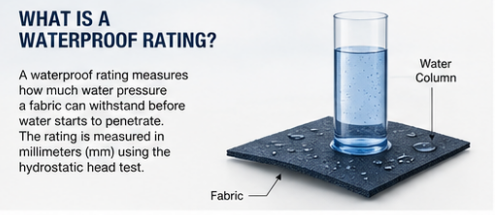
A waterproof rating measures how resistant a fabric is to water penetration.
Most outdoor apparel manufacturers use a test called the Hydrostatic Head Test to determine waterproof performance. The result is expressed in millimeters (mm).
The higher the number, the more water pressure the fabric can withstand before moisture begins to penetrate through the material.
For example:
- 5,000mm = Moderate waterproof protection
- 10,000mm = High waterproof protection
- 20,000mm = Professional-grade waterproof protection
However, waterproof performance is not solely about the rating itself. Factors such as seam sealing, fabric construction, coatings, and garment design also play critical roles.
How Does the Hydrostatic Head Test Work?
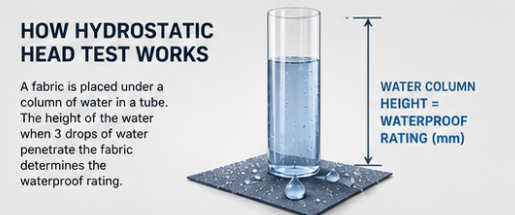
Imagine a clear tube standing vertically on top of a piece of fabric.
The tube is gradually filled with water.
The height of the water column increases until water eventually penetrates the fabric.
The height reached before leakage occurs determines the waterproof rating.
For example:
- If water penetrates at 5,000mm, the fabric receives a 5,000mm rating.
- If it withstands 10,000mm, it receives a 10,000mm rating.
- If it withstands 20,000mm, it receives a 20,000mm rating.
The higher the hydrostatic head, the better the fabric can resist heavy rain, pressure from backpack straps, kneeling on wet ground, and prolonged exposure to moisture.
Understanding a 5,000mm Waterproof Rating
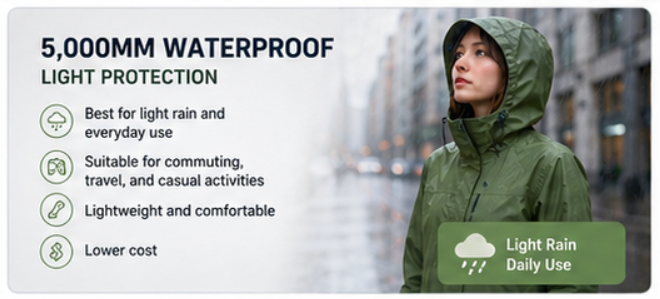
A 5,000mm waterproof rating is considered suitable for light outdoor activities and everyday use.
Best For:
- Daily commuting
- Urban outdoor activities
- Light hiking
- Travel in mild weather
- Occasional rain showers
Advantages:
✔ Lightweight fabrics
✔ Better comfort
✔ Lower cost
✔ Good breathability
Limitations:
✘ May struggle during prolonged heavy rain
✘ Less effective under pressure from backpacks
✘ Not ideal for mountain environments
If you only need protection during occasional showers or city use, a 5,000mm jacket is often more than sufficient.
Understanding a 10,000mm Waterproof Rating
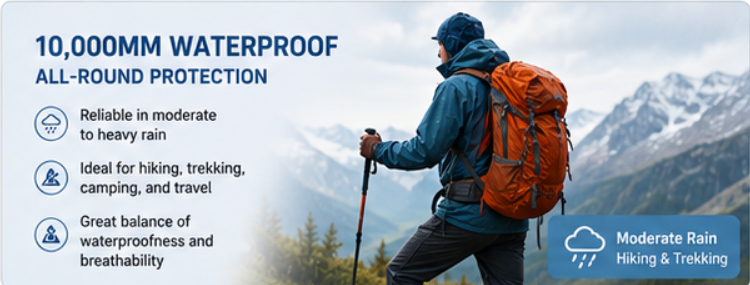
A 10,000mm waterproof rating is often considered the sweet spot for most outdoor enthusiasts.
Many hiking jackets, trekking jackets, and outdoor workwear products fall within this range.
Best For:
- Hiking
- Trekking
- Camping
- Travel in unpredictable weather
- Outdoor work environments
Advantages:
✔ Reliable rain protection
✔ Suitable for moderate to heavy rainfall
✔ Good balance of waterproofness and breathability
✔ Versatile for year-round outdoor use
Limitations:
✘ Slightly heavier than lower-rated fabrics
✘ Higher production cost
For most consumers, a 10,000mm waterproof jacket offers the best combination of performance, comfort, and value.
Understanding a 20,000mm Waterproof Rating
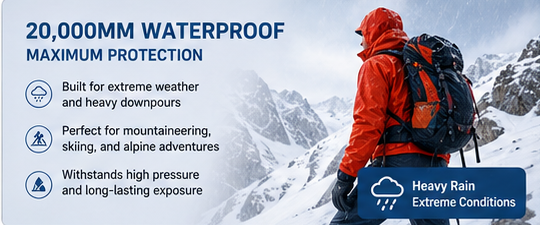
A 20,000mm waterproof rating is designed for demanding outdoor conditions.
This level of protection is commonly found in premium mountaineering jackets, alpine shells, ski jackets, and expedition gear.
Best For:
- Mountaineering
- Skiing and snowboarding
- Alpine hiking
- Extreme weather
- Professional outdoor use
Advantages:
✔ Exceptional waterproof performance
✔ Handles prolonged heavy rain
✔ Resists pressure from backpacks and equipment
✔ Suitable for extreme environments
Limitations:
✘ Higher price point
✘ May reduce breathability if fabric technology is not advanced
✘ Overkill for casual users
Unless you frequently face severe weather conditions, a 20,000mm jacket may provide more protection than you actually need.
5,000mm vs 10,000mm vs 20,000mm: Comparison Table
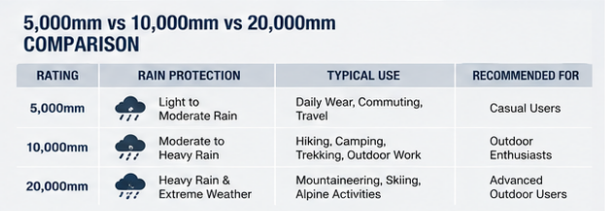
| Waterproof Rating | Rain Protection | Typical Use | Recommended User |
|---|---|---|---|
| 5,000mm | Light to moderate rain | Daily wear, commuting, travel | Casual users |
| 10,000mm | Moderate to heavy rain | Hiking, camping, trekking | Most outdoor enthusiasts |
| 20,000mm | Heavy rain and extreme weather | Mountaineering, skiing, alpine activities | Advanced outdoor users |
Which Waterproof Rating Do You Need?
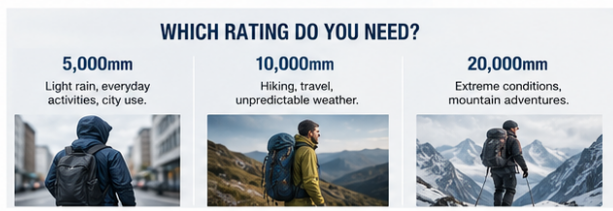
The best waterproof rating depends on how and where you'll use your jacket.
Choose 5,000mm If:
- You mainly wear jackets in urban environments.
- You experience occasional rain.
- Lightweight comfort is a priority.
Choose 10,000mm If:
- You hike regularly.
- You travel in changing weather conditions.
- You need a versatile all-round outdoor jacket.
Choose 20,000mm If:
- You spend extended periods outdoors.
- You encounter heavy storms or snow.
- You participate in technical mountain activities.
For most consumers, 10,000mm waterproof protection is the ideal choice because it balances weather protection, comfort, and affordability.
Waterproofness vs Breathability
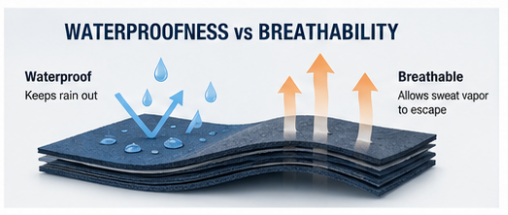
One common misconception is that higher waterproof ratings automatically mean better overall performance.
In reality, waterproofness and breathability must work together.
A jacket that blocks water effectively but traps sweat inside can become uncomfortable during physical activity.
When evaluating outdoor apparel, look at both:
Waterproof Rating
Measures resistance to external moisture.
Breathability Rating
Measures how effectively moisture vapor escapes from inside the garment.
A jacket with:
- 10,000mm Waterproof
- 10,000g Breathability
often provides a more comfortable experience than a poorly designed 20,000mm jacket with limited ventilation.
Features such as pit zips, mesh pockets, and advanced membrane technology can significantly improve comfort during active use.
Why Construction Matters as Much as Waterproof Rating
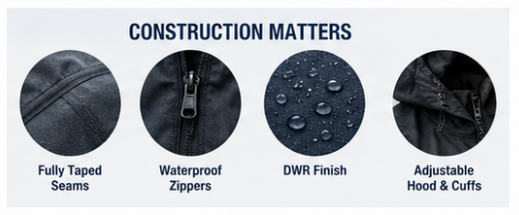
Even the highest-rated waterproof fabric can fail if the garment is poorly constructed.
Key features to look for include:
Fully Taped Seams
Prevents water from entering through stitch holes.
Waterproof Zippers
Provides additional protection in critical areas.
Durable Water Repellent (DWR) Finish
Helps water bead and roll off the surface.
Adjustable Hood and Cuffs
Reduces water entry during windy conditions.
Multi-Layer Construction
Improves durability and long-term waterproof performance.
For this reason, professional outdoor brands focus not only on fabric ratings but also on garment engineering and testing.
Common Waterproof Rating Myths
Myth 1: Higher Is Always Better
Not necessarily.
A 20,000mm jacket may be unnecessary for daily commuting.
Myth 2: Waterproof Means Breathable
Waterproofness and breathability are different measurements.
Myth 3: Waterproof Coatings Last Forever
DWR finishes wear down over time and require maintenance.
Myth 4: All Waterproof Jackets Perform the Same
Construction quality, seam sealing, and fabric technology create major differences between products.
Final Thoughts
Understanding waterproof ratings helps you choose the right outdoor apparel for your needs.
While 5,000mm fabrics provide adequate protection for everyday activities, 10,000mm waterproof jackets offer the best all-around performance for most outdoor users. For mountaineering, skiing, and severe weather conditions, 20,000mm fabrics deliver professional-level protection.
The key is selecting a jacket that matches your activity level rather than simply choosing the highest number available.
When combined with proper breathability, seam sealing, and thoughtful garment construction, the right waterproof rating can keep you comfortable and protected wherever your next adventure takes you.
Looking for high-performance waterproof jackets?
We specialize in OEM and ODM outdoor apparel manufacturing, including waterproof jackets, softshell jackets, hiking apparel, and workwear. Contact our team to discuss your next outdoor apparel project.