
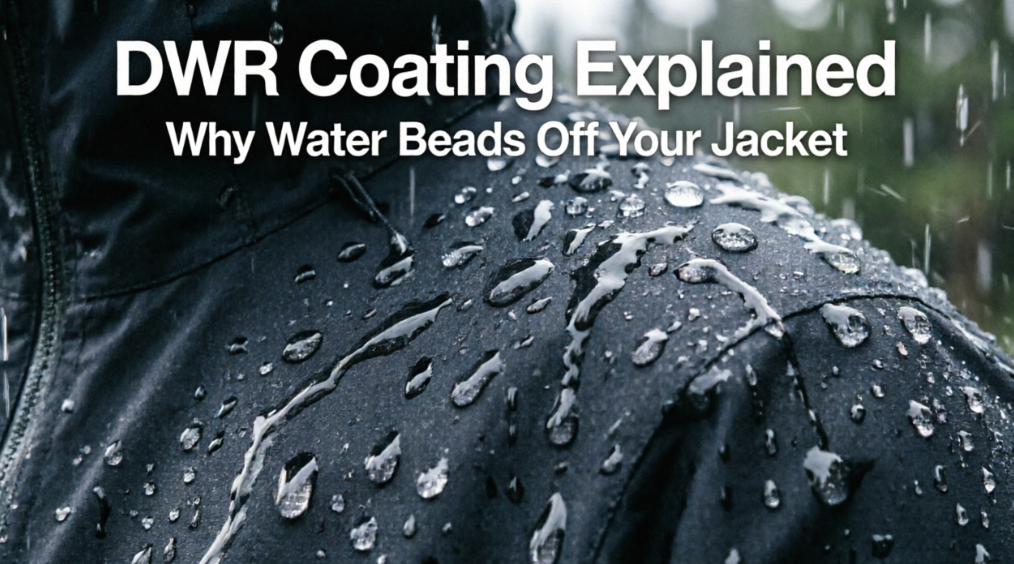
DWR Coating Explained: Why Water Beads Off Your Jacket
Jun 15, 2026
If you've ever worn a quality outdoor jacket in the rain, you've probably noticed water droplets forming small beads on the surface and rolling away instead of soaking into the fabric.
Many people assume this means the jacket is completely waterproof.
In reality, the effect is usually created by something called a DWR coating.
DWR, or Durable Water Repellent, is one of the most important technologies used in outdoor apparel today. It helps jackets stay lighter, more comfortable, and more breathable during wet conditions.
In this guide, we'll explain what DWR coating is, how it works, why it's important, and how to maintain it so your outdoor gear continues performing at its best.
What Is DWR?
DWR stands for:
Durable Water Repellent
It is a thin treatment applied to the outer surface of a fabric.
The purpose of DWR is not to make the fabric waterproof.
Instead, it reduces the surface energy of the fabric so water droplets cannot easily spread across the material.
As a result, rain forms beads and rolls off the surface.
This phenomenon is often called the lotus effect, inspired by how water naturally rolls off lotus leaves.
How Does DWR Work?
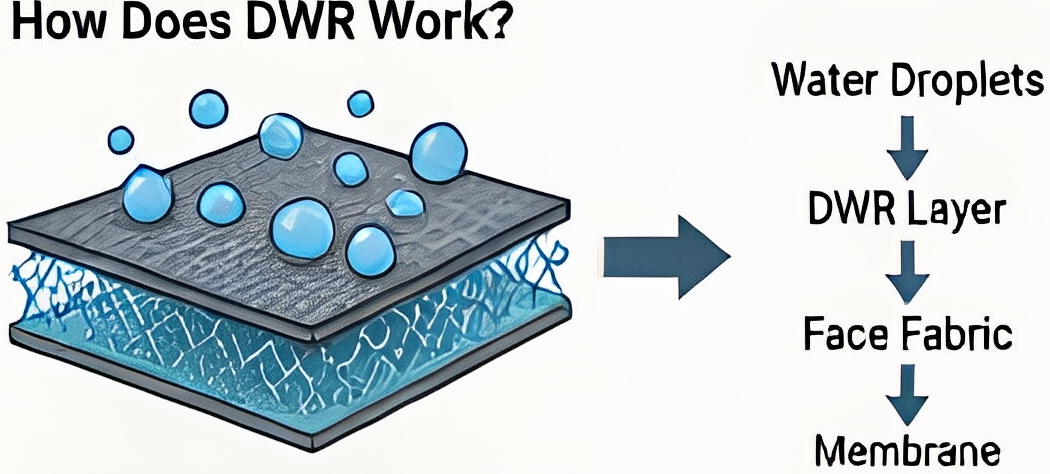
Under a microscope, untreated fabric fibers contain tiny spaces and irregular surfaces where water can spread and soak in.
When a DWR treatment is applied, these fibers receive a water-repellent finish.
Water molecules prefer sticking to themselves rather than attaching to the coated fabric.
As a result:
✔ Water beads up
✔ Water rolls away
✔ Fabric absorbs less moisture
✔ Outer fabric stays lighter
The treatment works on the fabric surface rather than creating a waterproof barrier.
Why Is DWR Important?
Many outdoor users underestimate the importance of DWR.
Even jackets with advanced waterproof membranes rely on DWR to perform effectively.
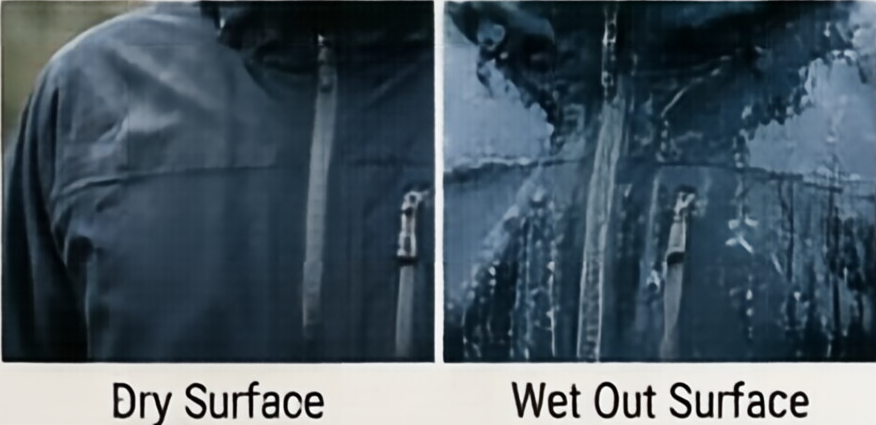
Without DWR, the outer fabric can become saturated during rain.
This condition is often called:
Wetting Out
When wetting out occurs:
- The face fabric becomes heavy.
- Breathability decreases.
- Drying time increases.
- The jacket feels colder and less comfortable.
A functioning DWR finish helps prevent this problem by keeping the outer layer dry.
DWR vs Waterproof Membranes
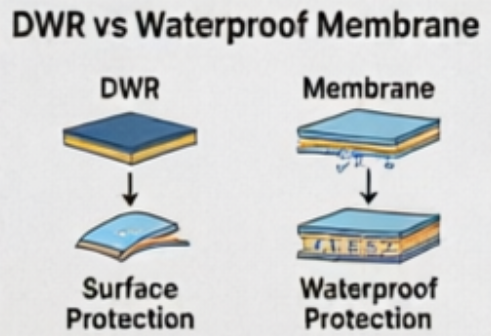
One of the biggest misconceptions is that DWR and waterproof membranes are the same thing.
They serve different purposes.
DWR Coating
Purpose:
Repels water from the fabric surface.
Location:
Applied to the outer fabric.
Function:
Encourages water to bead and roll away.
Waterproof Membrane
Purpose:
Prevents water from penetrating through the garment.
Location:
Inside the fabric construction.
Examples:
- Gore-Tex
- eVent
- Dermizax
- Proprietary PU membranes
Function:
Provides actual waterproof protection.
Think of DWR as the jacket's first line of defense and the waterproof membrane as the second line of defense.
Together, they create optimal weather protection.
What Happens When DWR Wears Off?
Over time, every DWR treatment begins to lose effectiveness.
This is completely normal.
Factors that accelerate wear include:
- Dirt and oils
- Backpack friction
- Washing
- UV exposure
- General wear and tear
Common signs of DWR failure include:
Water No Longer Beads
Instead of forming droplets, water spreads across the fabric.
Dark Wet Patches
The outer fabric starts absorbing moisture.
Reduced Comfort
The jacket feels damp and heavy.
Lower Breathability
Moisture struggles to escape through saturated fabric.
Fortunately, worn DWR can often be restored.
How to Restore DWR Performance
The good news is that DWR maintenance is relatively simple.
Step 1: Clean the Jacket
Dirt and body oils often reduce water repellency.
Use a technical garment cleaner rather than regular household detergent.
Wash according to the manufacturer's instructions.
Step 2: Apply Heat
Many DWR finishes can be reactivated using low heat.
Options include:
- Tumble drying on low heat
- Warm iron with protective cloth
- Following garment care instructions
Heat helps realign the water-repellent molecules on the fabric surface.
Step 3: Reapply DWR Treatment
If cleaning and heat do not restore performance, apply a new DWR treatment.
Common options include:
- Spray-on DWR
- Wash-in DWR
Spray treatments are generally preferred because they target the outer fabric without affecting inner moisture management.
Are Modern DWR Coatings Environmentally Friendly?

Traditional DWR treatments often relied on long-chain fluorocarbons (PFCs).
These chemicals provided excellent water repellency but raised environmental concerns.
Today, many outdoor brands have transitioned to:
- PFC-Free DWR
- C0 DWR
- Fluorocarbon-Free Finishes
These newer technologies reduce environmental impact while maintaining strong water repellency.
As sustainability becomes increasingly important, eco-friendly DWR solutions continue to improve.
Common Myths About DWR
Myth 1: DWR Makes a Jacket Waterproof
False.
DWR only helps water roll off the surface.
The waterproof membrane provides actual waterproof protection.
Myth 2: DWR Lasts Forever
False.
All DWR finishes gradually wear out.
Regular maintenance is necessary.
Myth 3: If Water Stops Beading, the Jacket Is Ruined
False.
In many cases, cleaning and reactivating the finish restores performance.
Myth 4: More DWR Means Better Breathability
Not necessarily.
Breathability primarily depends on fabric construction and membrane technology.
Why DWR Matters for Outdoor Performance
Whether you're hiking, trekking, camping, skiing, or commuting in rainy weather, DWR plays a crucial role in comfort and performance.
A well-maintained DWR finish helps:
- Keep the outer fabric dry
- Improve breathability
- Reduce fabric weight during rain
- Increase comfort in wet conditions
- Extend garment performance
Although it's often invisible, DWR is one of the most important technologies in modern outdoor apparel.
Final Thoughts
DWR coating is the reason water beads up and rolls off the surface of your outdoor jacket.
While it doesn't provide waterproof protection on its own, it helps waterproof garments perform more effectively by preventing the outer fabric from becoming saturated.
Understanding how DWR works—and how to maintain it—can significantly improve the lifespan and performance of your outdoor gear.
The next time you see water beading on your jacket, you'll know there's more going on than meets the eye.