
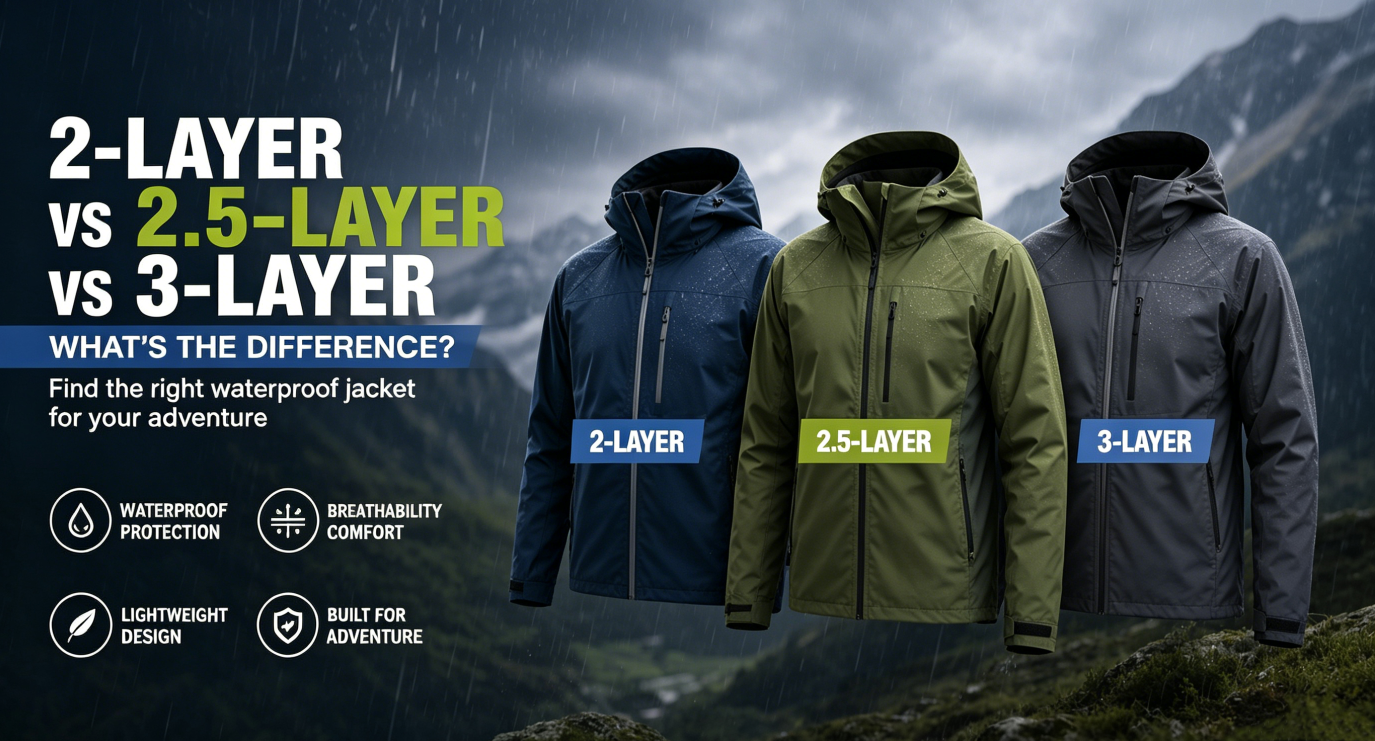
2-Layer vs 2.5-Layer vs 3-Layer Jackets: What's the Difference?
Jun 17, 2026
 If you've been researching waterproof jackets, you've probably encountered terms like 2-layer, 2.5-layer, and 3-layer construction.
At first glance, the numbers may seem confusing. Many people assume more layers automatically mean a warmer or heavier jacket. In reality, these layer constructions refer to how waterproof fabrics are built and how the waterproof membrane is integrated into the garment.
Understanding the difference can help you choose the right jacket for hiking, travel, commuting, mountaineering, or everyday outdoor use.
Let's break it down.
What Do "Layers" Mean in a Waterproof Jacket?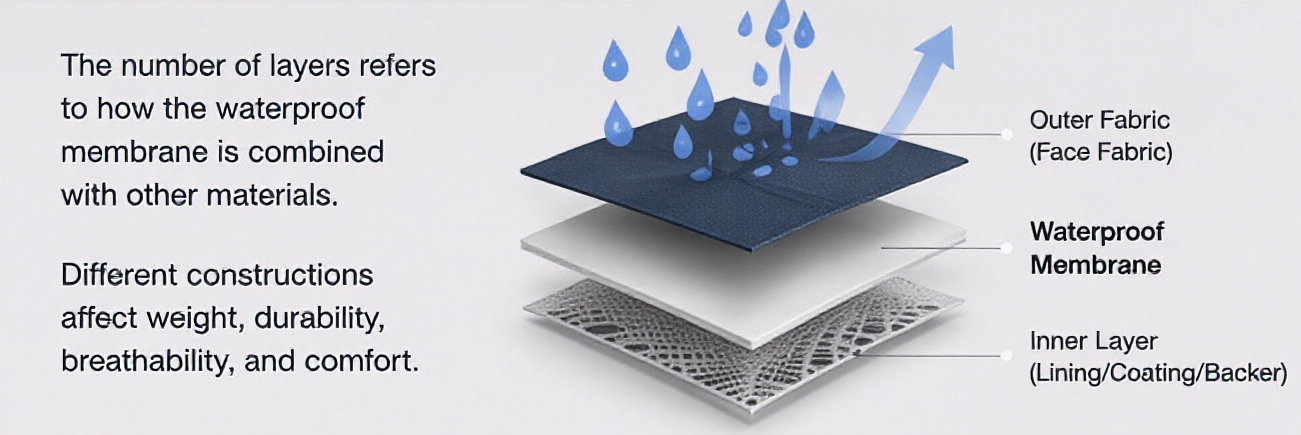
A waterproof jacket typically consists of:
- An outer face fabric
- A waterproof-breathable membrane
- An inner protective layer
The way these components are combined determines whether the jacket is classified as 2-layer, 2.5-layer, or 3-layer.
The number of layers affects:
- Weight
- Packability
- Durability
- Breathability
- Comfort
- Cost
What Is a 2-Layer Jacket?
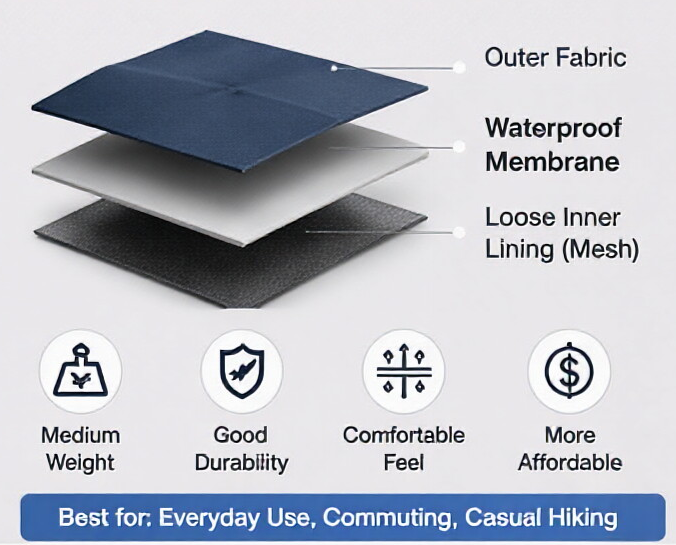
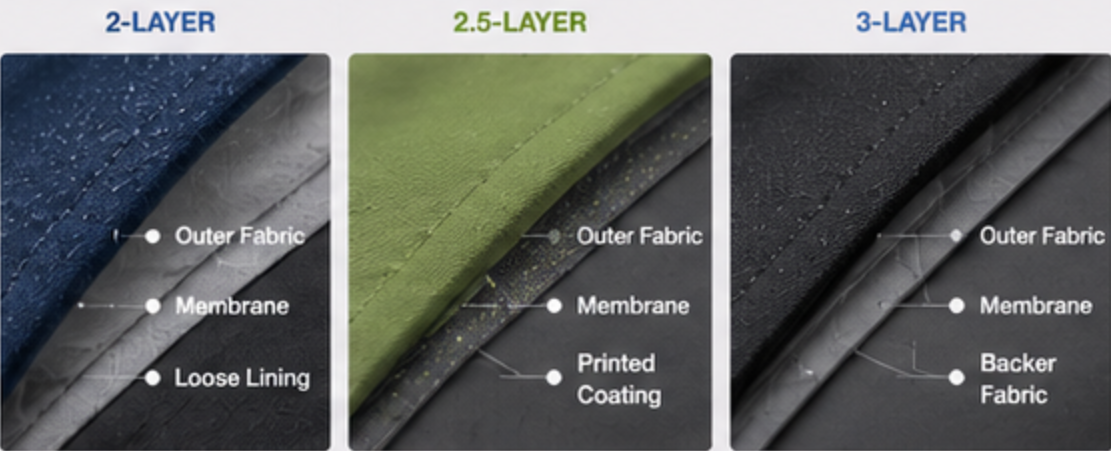
A 2-layer jacket combines:
- Face fabric
- Waterproof membrane
These two layers are bonded together.
A separate loose lining is then added inside the garment.
Structure
Outer Fabric
↓
Waterproof Membrane
↓
Mesh or Fabric Lining
Advantages
✔ Comfortable against the skin
✔ Good durability
✔ Often more affordable
✔ Suitable for everyday wear
Disadvantages
✘ Heavier than other constructions
✘ Less packable
✘ Lower breathability during high activity
Best For
- Daily commuting
- Urban outdoor use
- Casual hiking
- Travel
Many entry-level rain jackets and lifestyle outdoor jackets use 2-layer construction.
What Is a 2.5-Layer Jacket?
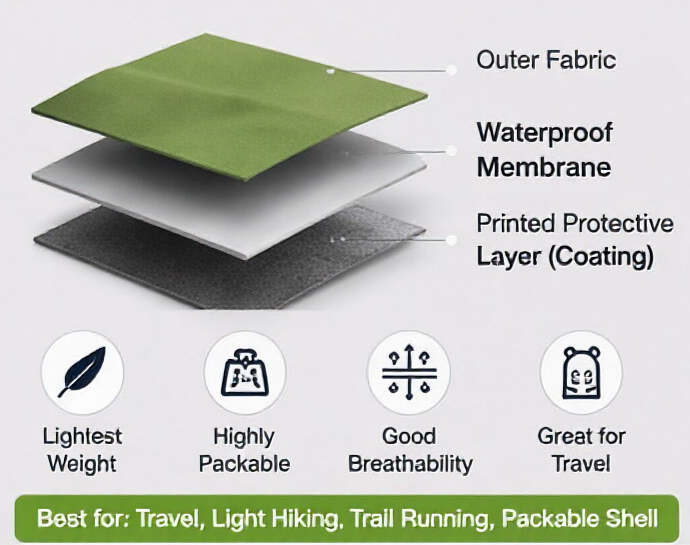
A 2.5-layer jacket consists of:
- Face fabric
- Waterproof membrane
- Protective printed or sprayed coating
Instead of using a separate inner lining, manufacturers apply a thin protective pattern directly onto the membrane.
This is considered the "half layer."
Structure
Outer Fabric
↓
Waterproof Membrane
↓
Printed Protective Layer
Advantages
✔ Extremely lightweight
✔ Highly packable
✔ Ideal for emergency rain protection
✔ Excellent for travel
Disadvantages
✘ Less durable than 3-layer fabrics
✘ Can feel clammy during extended wear
✘ Lower comfort against bare skin
Best For
- Lightweight hiking
- Trail running
- Travel
- Packable rain jackets
- Emergency shells
2.5-layer jackets are particularly popular among travelers and fast-moving outdoor users who prioritize low weight and compact storage.
What Is a 3-Layer Jacket?
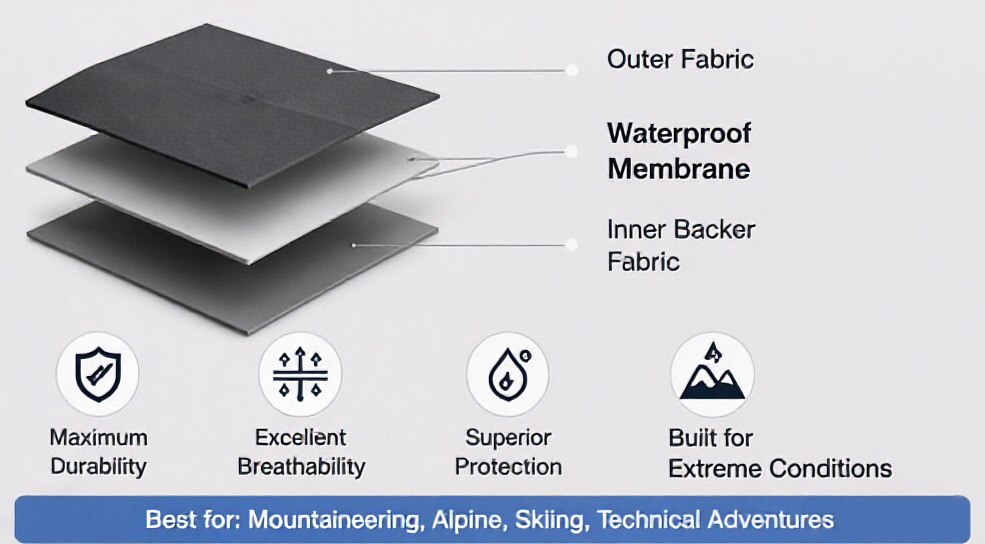
A 3-layer jacket integrates:
- Face fabric
- Waterproof-breathable membrane
- Inner backer fabric
All three layers are laminated together into a single fabric system.
Structure
Outer Fabric
↓
Waterproof Membrane
↓
Backer Fabric
Advantages
✔ Highest durability
✔ Superior breathability
✔ Better moisture management
✔ Greater comfort during active use
✔ Professional outdoor performance
Disadvantages
✘ Higher cost
✘ Slightly stiffer feel
Best For
- Mountaineering
- Alpine hiking
- Skiing
- Trekking
- Technical outdoor activities
Premium shell jackets from leading outdoor brands commonly use 3-layer construction.
Comparing 2-Layer, 2.5-Layer, and 3-Layer Jackets
| Feature | 2-Layer | 2.5-Layer | 3-Layer |
|---|---|---|---|
| Weight | Medium | Lightest | Medium |
| Packability | Moderate | Excellent | Good |
| Durability | Good | Moderate | Excellent |
| Breathability | Good | Good | Excellent |
| Comfort | High | Moderate | High |
| Cost | Lower | Mid-range | Higher |
| Technical Performance | Basic | Good | Best |
Which Jacket Construction Is Most Waterproof?
A common misconception is that 3-layer jackets are automatically more waterproof.
In reality, waterproofness depends primarily on:
- Waterproof membrane
- Fabric technology
- Seam sealing
- DWR treatment
A well-designed 2-layer jacket can be just as waterproof as a 3-layer jacket.
The main differences are durability, weight, comfort, and long-term performance.
Which Construction Is Best for Hiking?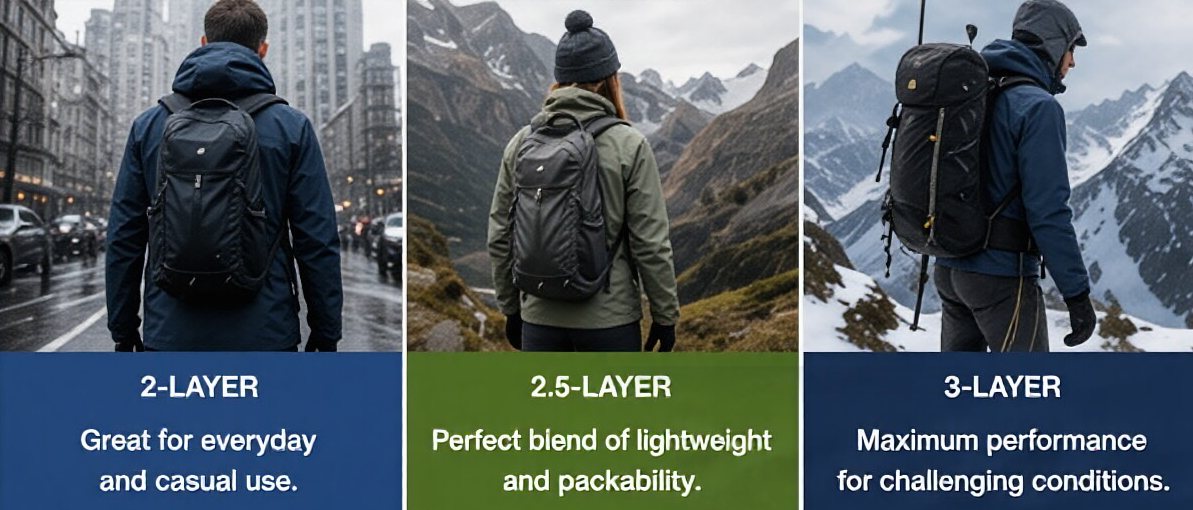
For most hikers:
Day Hiking
2.5-layer jackets offer an excellent balance between protection and packability.
Multi-Day Trekking
3-layer jackets provide better durability and comfort during prolonged use.
Casual Walks
2-layer jackets are often sufficient.
Which Construction Is Best for Travel?
Travelers usually prioritize:
- Lightweight gear
- Compact packing
- Versatility
For these reasons, 2.5-layer jackets are often the preferred choice for travel and urban outdoor activities.
They can easily fit into a backpack or suitcase without taking up much space.
Why Outdoor Professionals Prefer 3-Layer Jackets
Professional outdoor users often face:
- Heavy rain
- Snow
- Wind
- Backpack pressure
- Long exposure times
Under these conditions, 3-layer fabrics provide:
- Better abrasion resistance
- Improved moisture management
- Greater long-term reliability
This is why mountaineering, ski, and technical shell jackets are commonly built with 3-layer construction.
Common Myths About Waterproof Jacket Layers
Myth 1: More Layers Mean More Warmth
False.
Layer construction relates to fabric architecture, not insulation.
Myth 2: 3-Layer Jackets Are Always Better
Not necessarily.
The best jacket depends on your intended use.
Myth 3: 2.5-Layer Jackets Are Low Quality
False.
Many high-performance lightweight shells use advanced 2.5-layer construction.
Myth 4: All Waterproof Jackets Use the Same Technology
Different constructions provide different balances of weight, comfort, durability, and performance.
How Manufacturers Choose Layer Construction
Outdoor apparel manufacturers typically select construction based on product positioning.
2-Layer
Lifestyle and everyday outdoor products.
2.5-Layer
Lightweight performance and travel products.
3-Layer
Premium technical outdoor apparel.
The choice depends on target users, price point, and intended activity level.
When comparing 2-layer, 2.5-layer, and 3-layer jackets, there is no universal best option.
A commuter may be perfectly served by a 2-layer jacket.
A traveler may prefer the lightweight convenience of a 2.5-layer shell.
A mountaineer or serious hiker will likely benefit from the durability and performance of a 3-layer construction.
Understanding these differences helps you select a waterproof jacket that matches your activity, environment, and performance expectations.
The best waterproof jacket isn't simply the one with the most layers—it's the one designed for how you'll actually use it.