
How Stretch Fabrics Improve Outdoor Performance
Jun 19, 2026
 Outdoor apparel has evolved dramatically over the past two decades.
Gone are the days when outdoor clothing was stiff, bulky, and restrictive. Today's hikers, climbers, travelers, and outdoor professionals expect garments that move naturally with their bodies while still providing protection from the elements.
One of the most important innovations behind this evolution is stretch fabric technology.
Whether you're wearing a lightweight hiking jacket, softshell pants, or technical workwear, stretch fabrics can significantly improve comfort, mobility, and overall outdoor performance.
In this guide, we'll explore how stretch fabrics work, their key benefits, and why they have become an essential feature in modern outdoor apparel.
What Is Stretch Fabric?
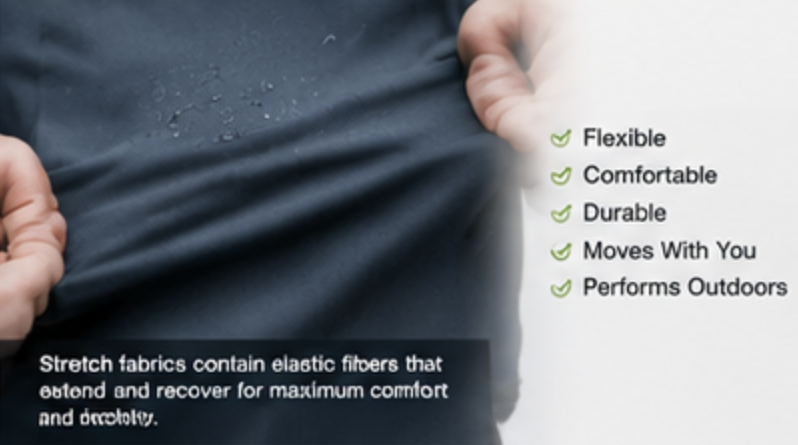
Stretch fabric is a textile designed to extend and recover its original shape after movement.
Most stretch fabrics achieve this by incorporating elastic fibers such as:
- Spandex
- Elastane
- Lycra®
These fibers are blended with materials like polyester or nylon to create fabrics that are flexible while maintaining strength and durability.
The result is clothing that moves with the wearer instead of restricting movement.
Why Mobility Matters Outdoors
Outdoor activities often involve a wide range of body movements.
Examples include:
- Climbing steep trails
- Crossing uneven terrain
- Reaching overhead
- Squatting
- Kneeling
- Carrying gear
Traditional non-stretch fabrics can limit these movements and create pressure points.
Stretch fabrics reduce restriction, allowing users to move more naturally and efficiently.
This improves both comfort and performance during outdoor activities.
2-Way Stretch vs 4-Way Stretch
Not all stretch fabrics are the same.
Understanding the difference helps explain why some garments feel more flexible than others.
2-Way Stretch
2-way stretch fabrics extend in one direction.
Usually:
- Horizontally (side to side)
Benefits:
✔ Improved comfort
✔ Better fit
✔ Moderate flexibility
Common Applications:
- Casual outdoor wear
- Everyday workwear
- Travel apparel
4-Way Stretch
4-way stretch fabrics extend in both directions.
- Horizontally
- Vertically
Benefits:
✔ Maximum mobility
✔ Greater comfort
✔ Enhanced athletic performance
✔ Reduced movement restriction
Common Applications:
- Hiking pants
- Softshell jackets
- Climbing apparel
- Technical outdoor gear
For active outdoor use, 4-way stretch is generally considered the premium option.
Key Benefits of Stretch Fabrics
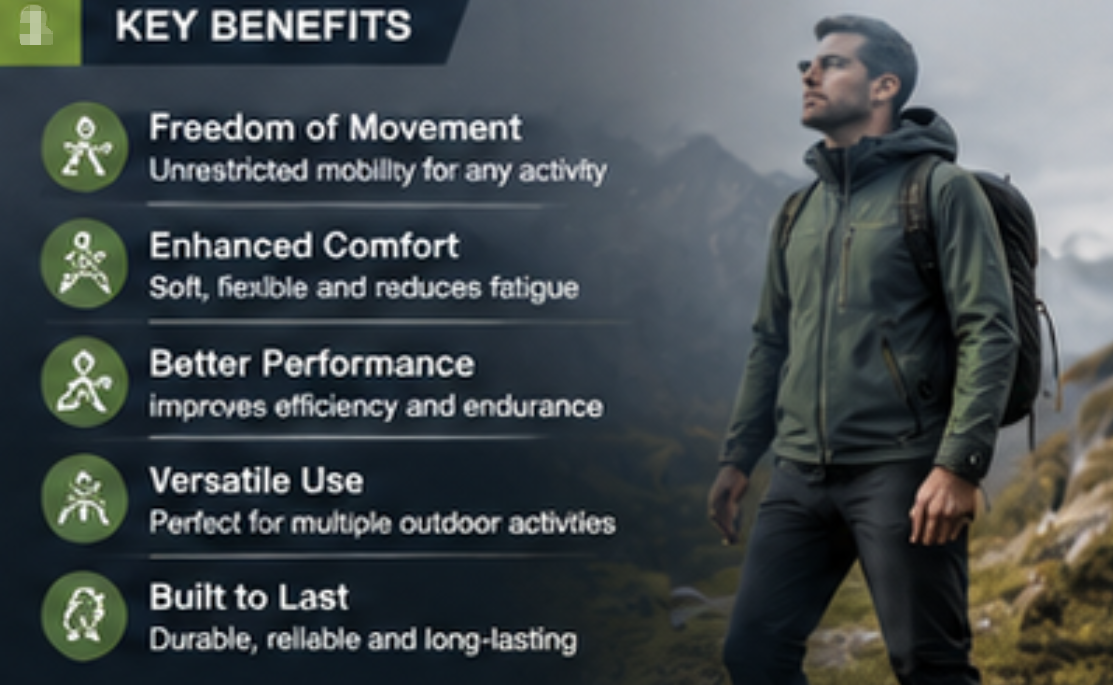
1. Improved Freedom of Movement
The most obvious benefit is unrestricted movement.
Whether you're climbing over rocks or bending to set up a tent, stretch fabrics move naturally with your body.
This minimizes resistance and improves overall comfort.
2. Enhanced Comfort
Clothing that stretches feels more comfortable during extended wear.
Users experience:
- Less pulling
- Less tightness
- Reduced pressure points
This becomes particularly important during long hikes or multi-day outdoor adventures.
3. Better Athletic Performance
Athletes and outdoor enthusiasts often choose stretch apparel because it supports dynamic movement.
Benefits include:
- Longer stride length
- Improved climbing mobility
- Greater flexibility during technical activities
Even small improvements in movement efficiency can reduce fatigue over time.
4. Better Fit Across Different Body Types
Stretch fabrics adapt to a wider range of body shapes.
This improves:
- Fit consistency
- Wearer comfort
- Customer satisfaction
For apparel brands, stretch materials often reduce fit-related complaints and returns.
5. Increased Versatility
One reason stretch fabrics are so popular is versatility.
A stretch softshell jacket can be used for:
- Hiking
- Travel
- Commuting
- Outdoor work
The same garment performs well across multiple environments.
Stretch Fabrics in Outdoor Jackets
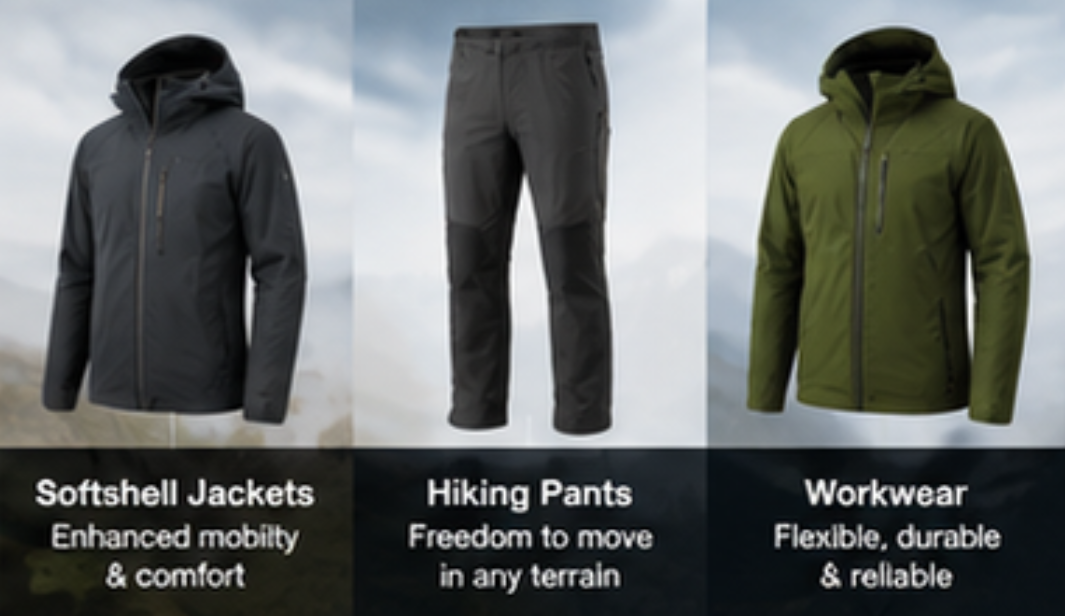
Modern outdoor jackets increasingly use stretch technology.
Benefits include:
- Improved shoulder mobility
- Better arm movement
- Enhanced comfort when carrying backpacks
- Greater freedom during climbing or trekking
Many premium softshell jackets now incorporate 4-way stretch fabrics as a standard feature.
Stretch Fabrics in Hiking Pants
Perhaps no garment benefits more from stretch technology than hiking pants.
Hiking involves:
- Stepping over obstacles
- Climbing
- Squatting
- Long walking distances
Stretch fabrics improve mobility while reducing fabric tension.
This helps hikers move more efficiently and comfortably.
Stretch Fabrics in Workwear
Stretch technology has expanded beyond outdoor recreation.
Many workwear manufacturers now integrate stretch fabrics into:
- Construction apparel
- Utility uniforms
- Service workwear
- Industrial clothing
Benefits include:
- Improved comfort
- Reduced worker fatigue
- Increased productivity
- Better range of motion
This is especially important for workers who bend, lift, or climb throughout the day.
Durability and Stretch Fabric
A common misconception is that stretch fabrics are less durable.
Modern stretch fabrics are engineered to combine:
- Elasticity
- Abrasion resistance
- Tear strength
High-quality outdoor fabrics can provide both flexibility and long-term durability.
This is why stretch materials are now widely used in demanding outdoor environments.
Are Stretch Fabrics Breathable?
Most outdoor stretch fabrics are designed with breathability in mind.
Many feature:
- Moisture management technology
- Air-permeable structures
- Breathable softshell construction
This helps regulate body temperature and improve comfort during physical activity.
The combination of stretch and breathability makes these fabrics particularly effective for active outdoor use.
Common Myths About Stretch Fabrics
Myth 1: Stretch Fabrics Are Only for Sportswear
False.
Stretch fabrics are widely used in outdoor apparel, travel clothing, and workwear.
Myth 2: Stretch Means Less Durable
False.
Modern stretch fabrics can be extremely durable and abrasion resistant.
Myth 3: All Stretch Fabrics Perform the Same
False.
Performance varies depending on fiber content, fabric construction, and intended use.
Myth 4: Stretch Fabrics Are Only About Comfort
False.
They also improve mobility, efficiency, and overall outdoor performance.
Why Stretch Fabrics Have Become an Industry Standard
Today's outdoor consumers expect apparel that performs without limiting movement.
Stretch fabrics help achieve this balance by providing:
- Comfort
- Mobility
- Durability
- Versatility
- Performance
As outdoor activities become more dynamic and demanding, stretch technology continues to play a growing role in apparel development.
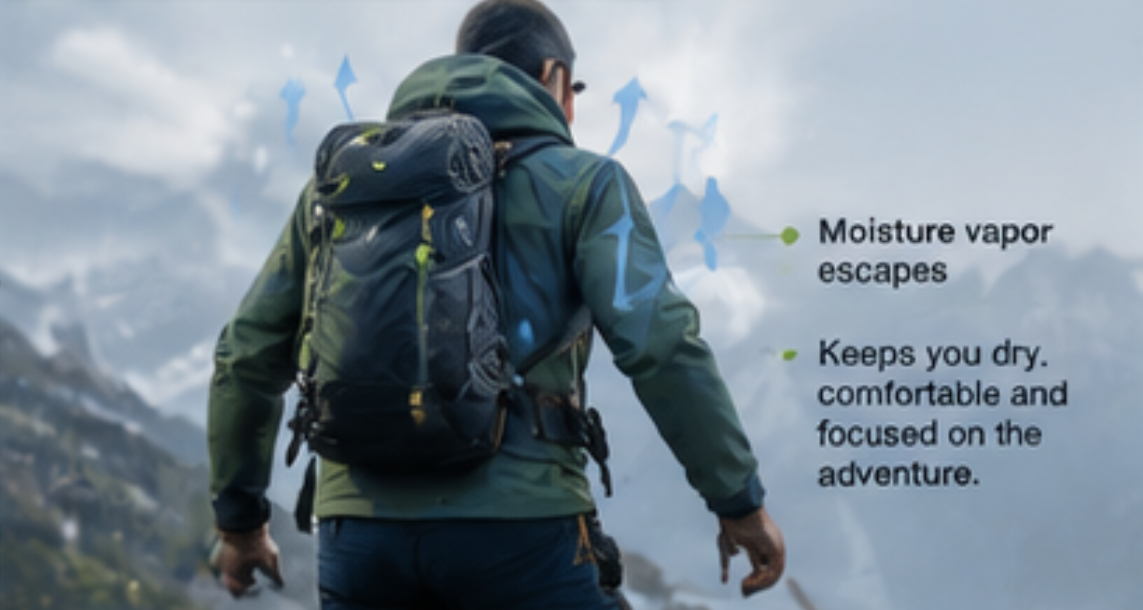
Stretch fabrics have transformed modern outdoor apparel by allowing garments to move naturally with the body.
Whether you're hiking, climbing, traveling, or working outdoors, stretch technology improves comfort, flexibility, and overall performance.
From lightweight hiking pants to premium softshell jackets, stretch fabrics provide a practical advantage that users notice every time they move.
For outdoor brands and consumers alike, stretch fabric is no longer a luxury feature—it's an essential part of high-performance apparel design.