
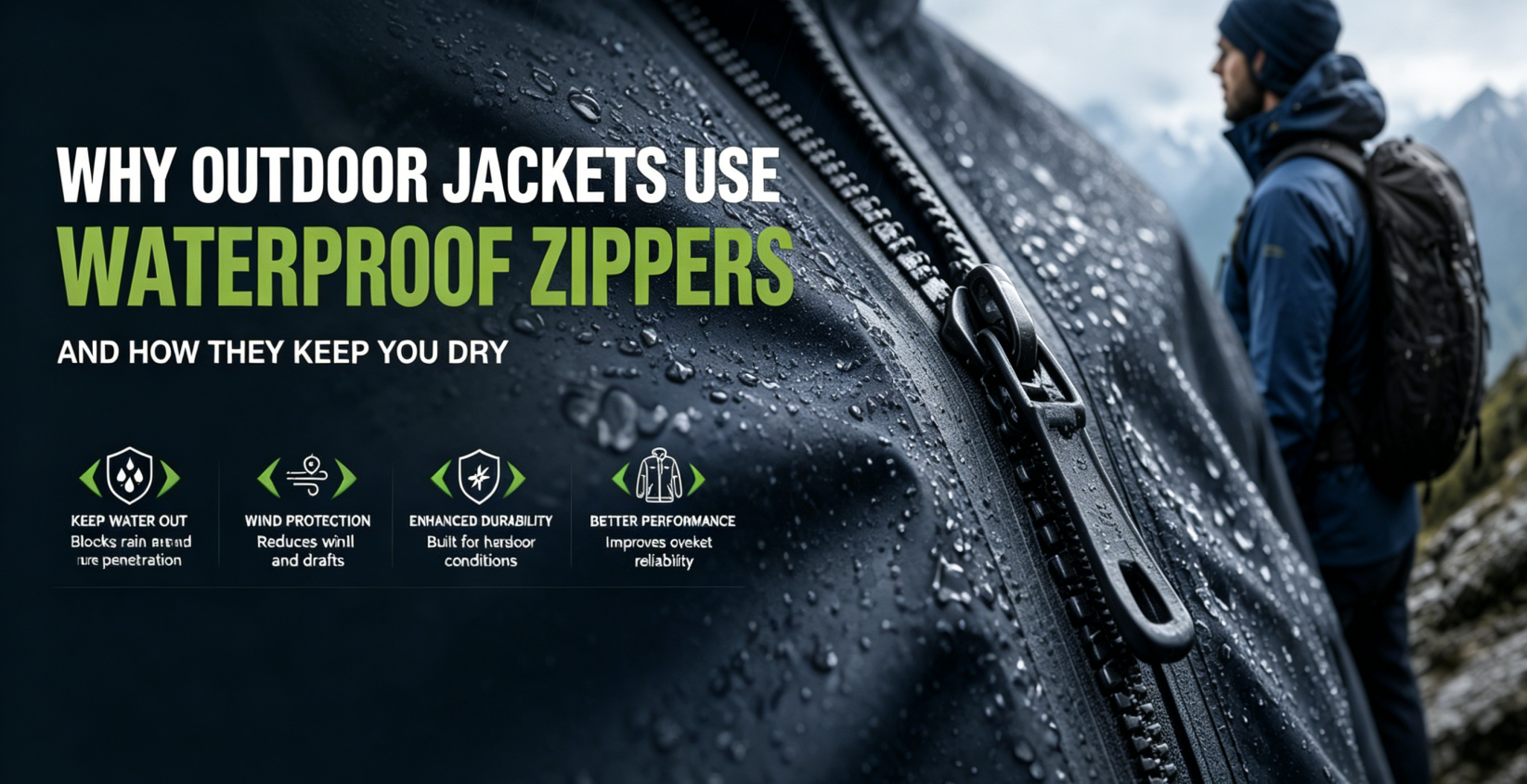
Why Outdoor Jackets Use Waterproof Zippers (And How They Keep You Dry)
Jun 23, 2026
 When you think about waterproof jackets, you probably focus on the fabric or membrane technology.
However, there is another critical component that plays a major role in keeping water out: The zipper
Even the most advanced waterproof fabric cannot perform properly if water enters through the zipper system.
That is why modern outdoor jackets use waterproof zippers as part of a complete weather protection system.
In this guide, we will explain how waterproof zippers work, why they matter, and how they improve overall jacket performance.
Why Do Zippers Need to Be Waterproof?
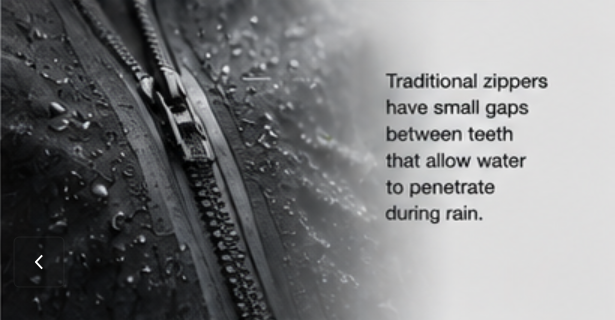
Traditional zippers are made with interlocking teeth.
While they provide fastening and flexibility, they also create small gaps between the teeth and fabric tape.
During heavy rain, water can:
- Penetrate between zipper teeth
- Travel along stitching channels
- Enter through zipper seams
This makes the zipper one of the most vulnerable points in a jacket.
Even if the fabric is fully waterproof, an unprotected zipper can cause leakage.
What Is a Waterproof Zipper?
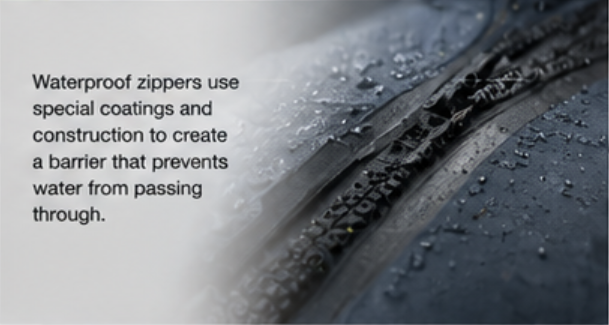
A waterproof zipper is a specially designed closure system that prevents water from passing through the zipper structure.
Instead of exposed teeth, waterproof zippers use protective layers such as:
- PU (Polyurethane) coating
- Laminated waterproof tape
- Heat-sealed zipper covers
- Rubberized sealing layers
These features create a barrier that blocks water from entering through the zipper area.
How Waterproof Zippers Work
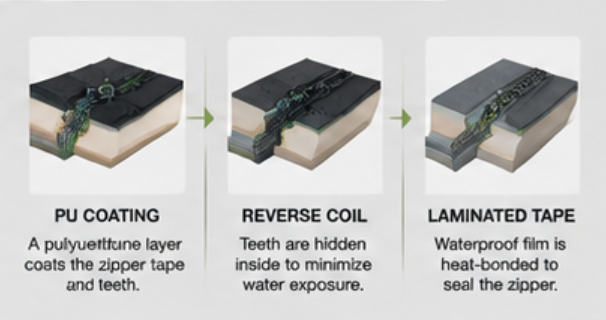
Waterproof zippers work by sealing or covering the zipper teeth with a protective layer.
There are three main mechanisms:
1. PU-Coated Zippers
A thin polyurethane layer is applied over the zipper tape.
This prevents water from passing through the fabric and stitching holes.
2. Reverse Coil Zippers
The zipper teeth are hidden on the inside of the jacket.
The smooth outer surface reduces water exposure.
3. Laminated Waterproof Zippers
A waterproof film is heat-bonded to the zipper tape.
This creates a fully sealed structure with high water resistance.
Key Benefits of Waterproof Zippers
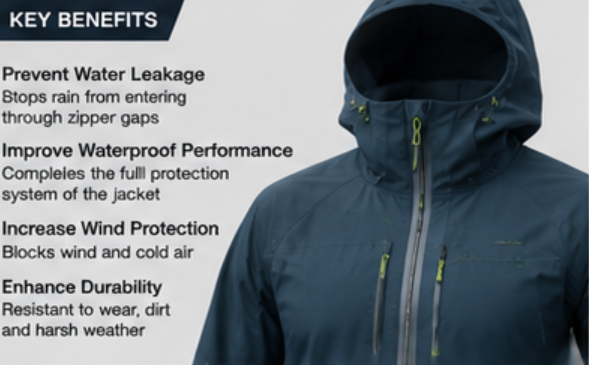
1. Prevent Water Leakage
The main benefit is obvious:
✔ Stops rain from entering through zipper gaps
This is especially important during:
- Heavy rainfall
- Long outdoor exposure
- Wind-driven rain conditions
2. Improve Overall Jacket Waterproof Performance
A jacket is only as waterproof as its weakest point.
By sealing the zipper area, manufacturers ensure the entire garment system works together:
- Waterproof fabric
- Seam sealing
- Waterproof zipper
3. Increase Wind Protection
Waterproof zippers also help block wind penetration, improving warmth and comfort in cold conditions.
4. Enhance Durability
Coated zippers are often more resistant to:
- Dirt
- Dust
- Abrasion
- Weather exposure
This improves long-term performance in outdoor environments.
Waterproof Zippers vs Regular Zippers
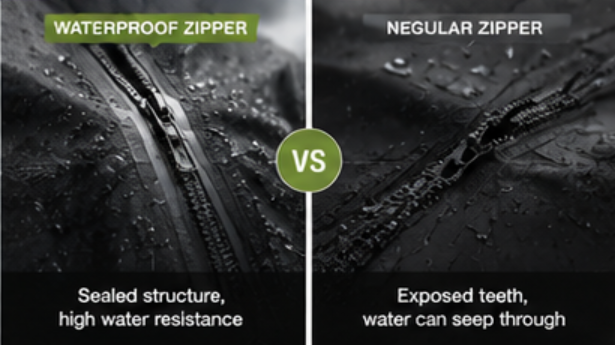
Regular Zippers
- Exposed teeth
- Air and water gaps
- Lower weather resistance
Best for:
- Casual clothing
- Fashion jackets
- Light outerwear
Waterproof Zippers
- Sealed or coated structure
- Water-resistant barrier
- Higher durability in outdoor use
Best for:
- Rain jackets
- Hiking shells
- Ski jackets
- Technical outdoor apparel
Where Waterproof Zippers Are Used
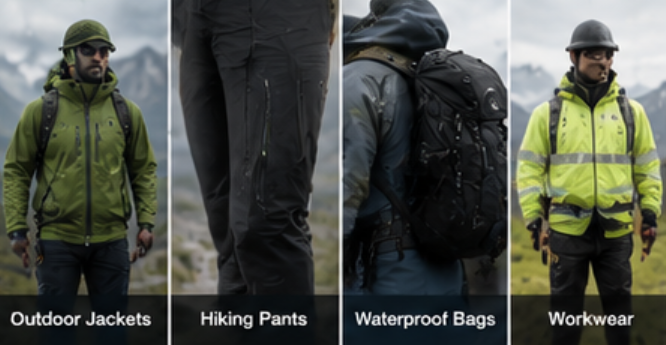
Waterproof zippers are commonly found in:
Outdoor Jackets
Used in front closure systems and pocket designs.
Hiking Pants
Protect thigh or cargo pocket openings.
Waterproof Bags
Ensure contents stay dry during travel or outdoor use.
Workwear
Protect workers exposed to rain or wet environments.
Are Waterproof Zippers Completely Waterproof?
This is an important question.
The answer is:
Not always 100% waterproof under extreme conditions.
Most waterproof zippers are:
✔ Highly water-resistant
✔ Designed for heavy rain conditions
✔ Tested under industry standards
However, in extreme pressure (such as prolonged submersion), additional protection may be required.
Common Misconceptions
Myth 1: Waterproof Zippers Never Leak
False.
Poor installation or wear over time can reduce performance.
Myth 2: All Waterproof Jackets Use Waterproof Zippers
Not true.
Some entry-level jackets use standard zippers with storm flaps instead.
Myth 3: Waterproof Zippers Are Stiff and Uncomfortable
Modern waterproof zippers are designed to be flexible and durable.
How Manufacturers Test Waterproof Zippers
Outdoor apparel manufacturers test zippers using:
- Water spray tests
- Hydrostatic pressure testing
- Repeated opening/closing cycles
- Cold weather flexibility tests
These ensure performance in real-world conditions.
Waterproof Zippers in Full Jacket Systems
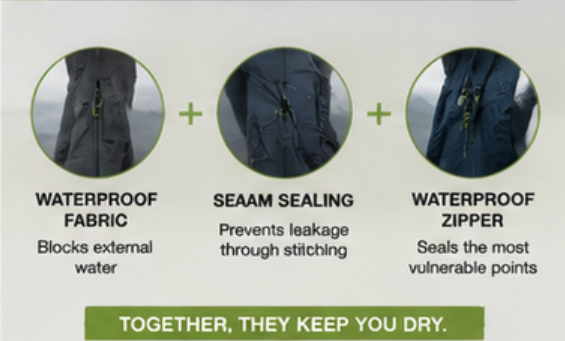
A truly waterproof jacket depends on three components working together:
1. Waterproof Fabric
Blocks external water penetration.
2. Seam Sealing
Prevents leakage through stitching.
3. Waterproof Zipper
Seals one of the most vulnerable entry points.
If any of these elements fail, water can enter the garment.
Why Waterproof Zippers Matter for Outdoor Performance
For outdoor users, zipper performance is not just a small detail—it directly impacts comfort and protection.
A high-quality waterproof zipper helps ensure:
- Dry interior environment
- Better thermal comfort
- Improved storm protection
- Longer garment lifespan
Waterproof zippers are an essential component of modern outdoor jackets.
They work alongside waterproof fabrics and seam sealing to create a complete weather protection system.
Without them, even the most advanced jacket would have a weak point where water could enter.
From hiking in heavy rain to working outdoors in harsh conditions, waterproof zippers play a critical role in keeping users dry, comfortable, and protected.
In high-performance outdoor apparel, every detail matters—and the zipper is no exception.