
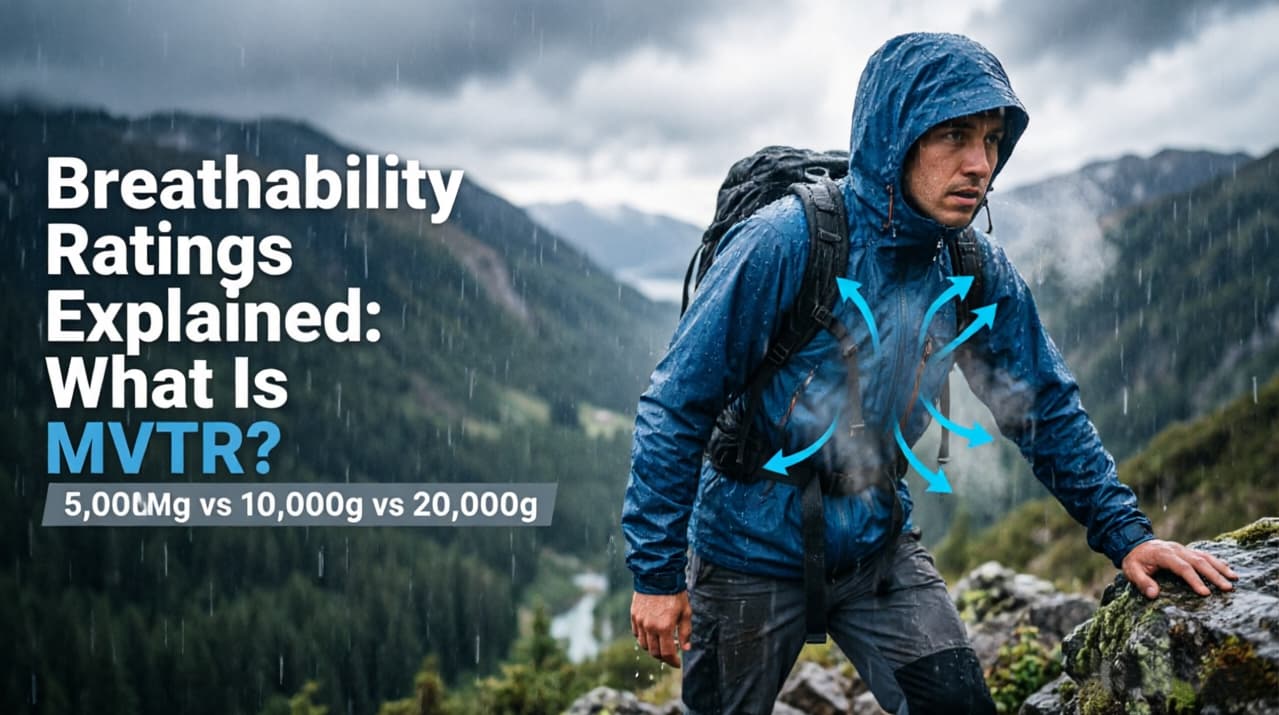
Breathability Ratings Explained: What Is MVTR and Why Does It Matter?
Jun 14, 2026
When shopping for outdoor jackets, most people focus on waterproof ratings. While staying dry from rain is important, staying dry from your own sweat can be equally critical.
A jacket that blocks rain but traps moisture inside can quickly become uncomfortable during hiking, trekking, climbing, or even daily commuting.
This is where breathability comes in.
If you've ever seen ratings such as 5,000g, 10,000g, or 20,000g on outdoor apparel, those numbers usually refer to a measurement called MVTR.
In this guide, we'll explain what MVTR means, how breathability ratings work, and how to choose the right breathable outdoor jacket for your activities.
What Is Breathability in Outdoor Clothing?
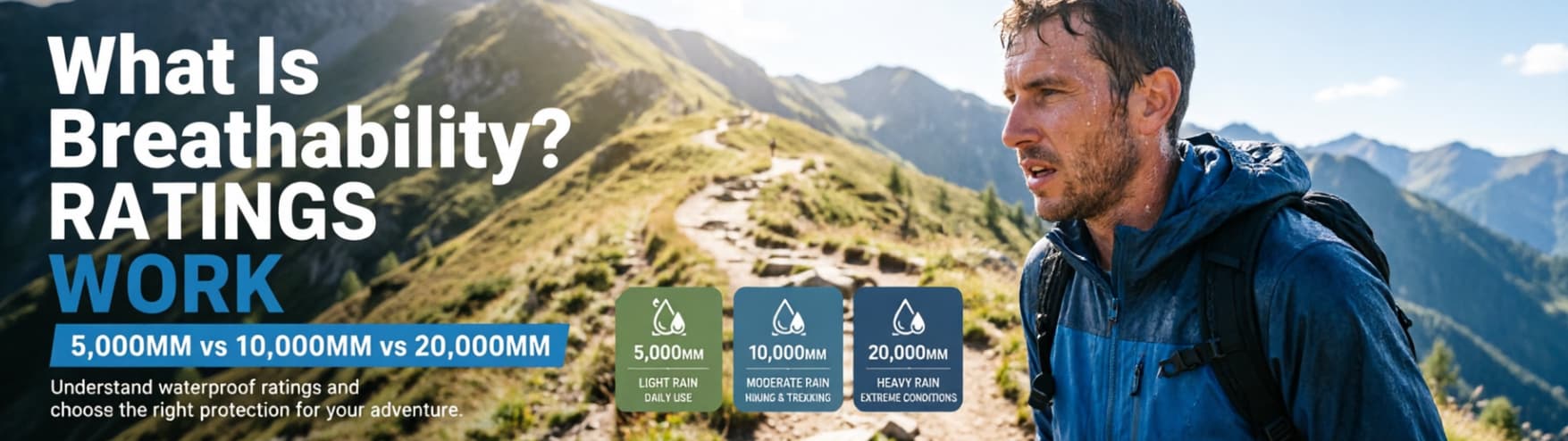
Breathability refers to a fabric's ability to allow moisture vapor to escape from inside a garment.
When you exercise, your body produces heat and sweat.
Even if rain isn't falling, moisture can build up inside your jacket.
Without proper breathability, this trapped moisture creates a damp, clammy feeling.
A breathable fabric allows sweat vapor to move through the material and evaporate into the atmosphere, helping you stay comfortable and dry.
What Does MVTR Mean?
MVTR stands for:
Moisture Vapor Transmission Rate
It measures how much water vapor can pass through one square meter of fabric within 24 hours.
The result is usually shown as:
g/m²/24h
For example:
- 5,000g/m²/24h
- 10,000g/m²/24h
- 20,000g/m²/24h
The higher the number, the more moisture vapor can escape from the garment.
In simple terms:
Higher MVTR = Better Breathability
How Is MVTR Measured?
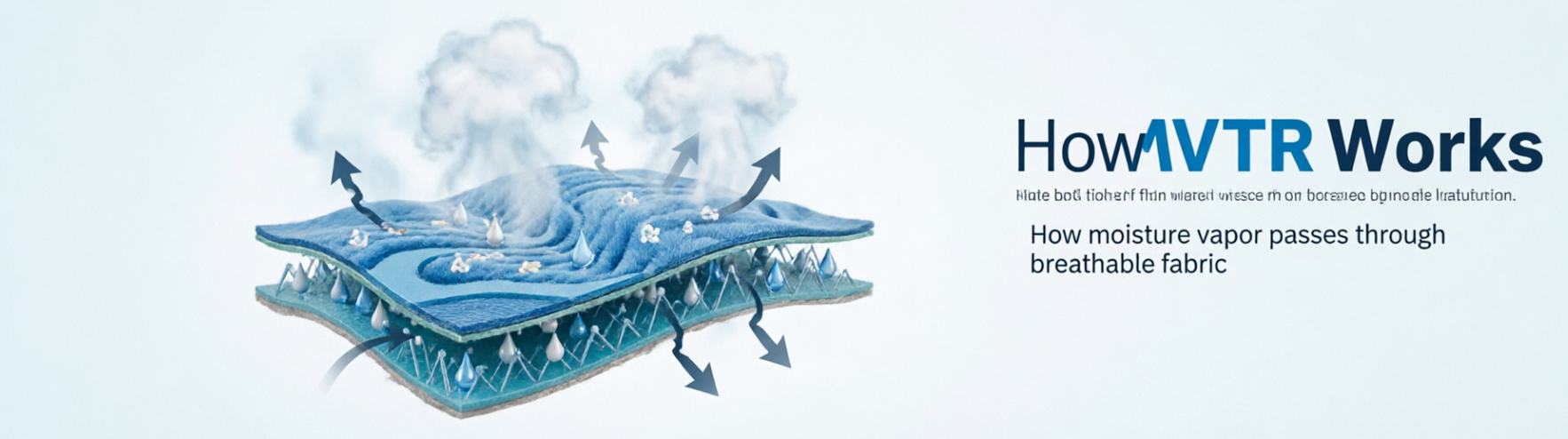
During laboratory testing, a fabric sample is placed between two controlled environments.
Scientists measure how much moisture vapor passes through the fabric over a 24-hour period.
The total amount of transferred moisture determines the MVTR rating.
For example:
- 5,000g MVTR means 5,000 grams of water vapor can pass through one square meter of fabric in 24 hours.
- 10,000g MVTR allows twice as much vapor transfer.
- 20,000g MVTR offers exceptionally high breathability for demanding outdoor activities.
Understanding 5,000g vs 10,000g vs 20,000g Breathability Ratings
https://www.suns-rise.com/show-35-52.html
5,000g Breathability
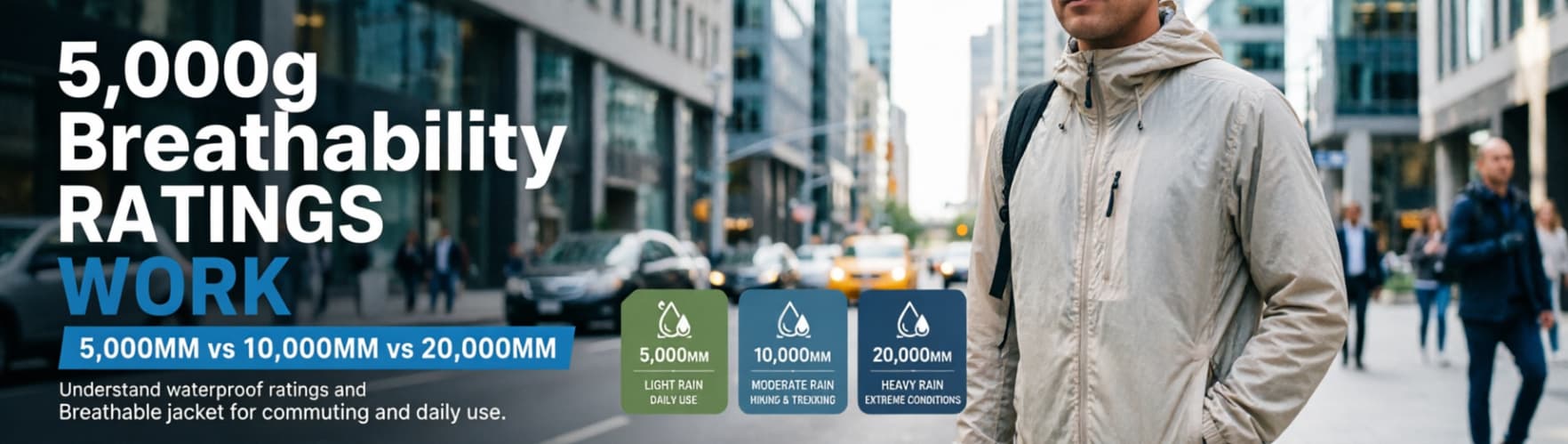
Suitable for:
- Daily commuting
- Casual outdoor activities
- Light walking
- Travel
Advantages:
✔ Comfortable for everyday wear
✔ Affordable
✔ Lightweight
Limitations:
✘ Can feel warm during strenuous activity
10,000g Breathability
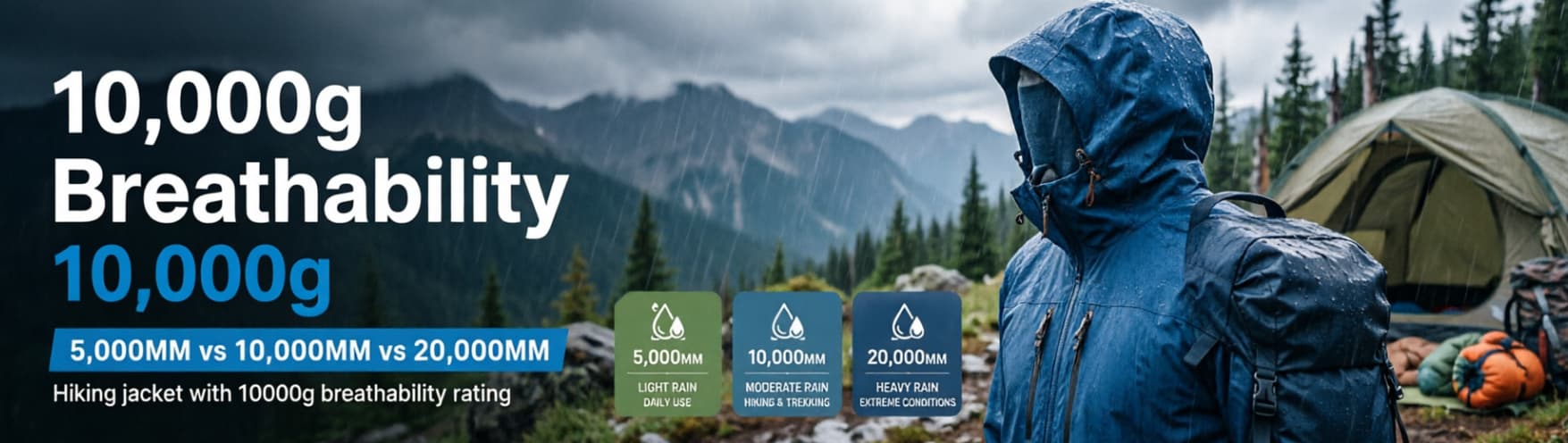
Suitable for:
- Hiking
- Camping
- Trekking
- Travel
Advantages:
✔ Good moisture management
✔ Excellent all-round performance
✔ Ideal balance of comfort and protection
For most outdoor users, 10,000g is the sweet spot.
20,000g Breathability
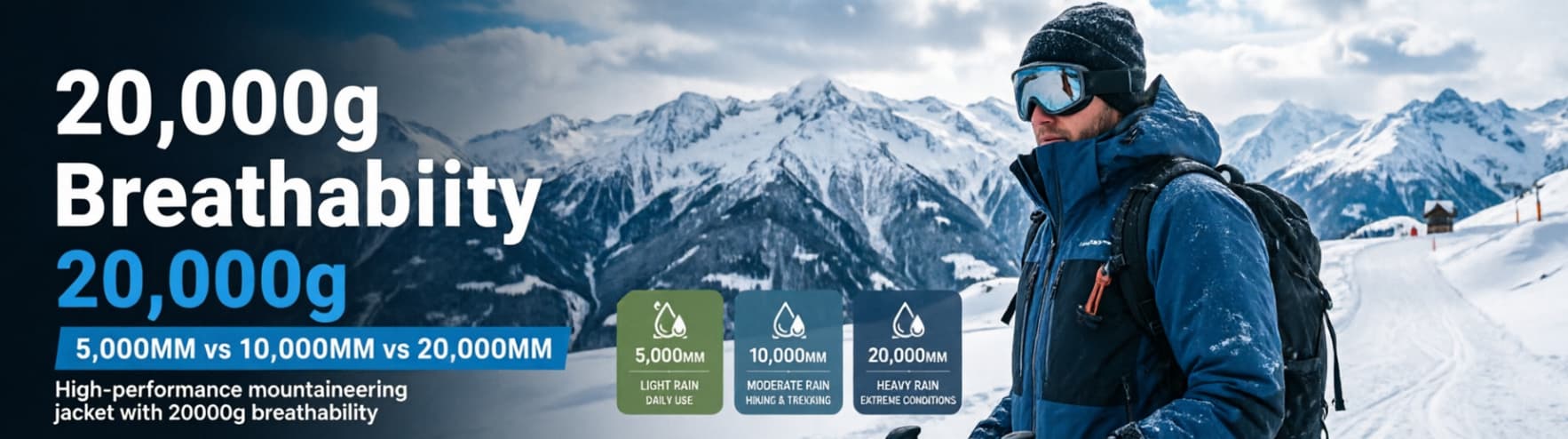
Suitable for:
- Mountaineering
- Trail running
- Skiing
- Alpine adventures
Advantages:
✔ Exceptional moisture transfer
✔ High-intensity activity support
✔ Maximum comfort during prolonged exertion
This level is typically found in premium outdoor apparel.
Why Breathability Matters During Outdoor Activities
Imagine hiking uphill on a cool day.
Your body begins producing sweat.
If your jacket cannot release that moisture, condensation builds inside.
Eventually, your base layers become wet.
Ironically, many people mistake this internal moisture for rain leakage.
In reality, poor breathability is often the cause.
A breathable jacket helps regulate temperature and reduce moisture buildup, keeping you comfortable throughout your activity.
Breathability vs Waterproofness: Finding the Right Balance
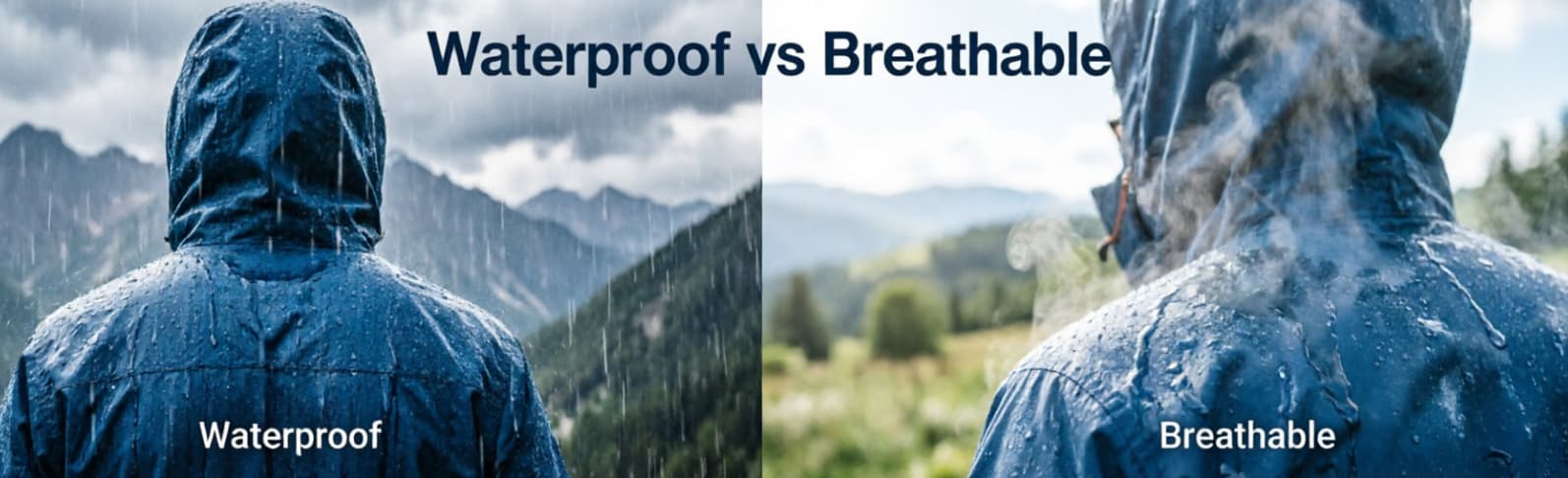
Many consumers assume the most waterproof jacket is always the best choice.
However, waterproofness and breathability must work together.
A high-performance outdoor jacket should:
- Block external moisture
- Release internal moisture
- Maintain comfort during movement
For most hiking and travel applications, a jacket with:
- 10,000mm Waterproof Rating
- 10,000g Breathability Rating
provides an excellent balance of protection and comfort.
Factors That Affect Jacket Breathability
Breathability is influenced by more than just MVTR.
Fabric Technology
Advanced membranes improve moisture transport.
Ventilation Features
Pit zips and mesh-lined pockets increase airflow.
Layer Construction
2-layer, 2.5-layer, and 3-layer fabrics perform differently.
Activity Level
Higher intensity activities require higher breathability ratings.
Common Myths About Breathable Fabrics
Myth 1: Breathable Means Air Passes Freely
Not exactly.
Most waterproof-breathable fabrics allow moisture vapor to pass while still blocking liquid water.
Myth 2: Higher MVTR Is Always Necessary
A commuter may never benefit from a 20,000g fabric.
Myth 3: Waterproof Jackets Can't Be Breathable
Modern fabric technologies allow both waterproofness and breathability to coexist.
Myth 4: Breathability Is Only Important for Athletes
Even everyday users can benefit from better moisture management.
Which Breathability Rating Should You Choose?
Choose 5,000g if:
- You need a casual rain jacket.
- You mainly commute or travel.
Choose 10,000g if:
- You hike regularly.
- You need an all-purpose outdoor jacket.
Choose 20,000g if:
- You participate in high-intensity outdoor sports.
- You require professional-level performance.
For most outdoor enthusiasts, a 10,000g breathability rating offers the best balance of comfort, performance, and value.
Final Thoughts
While waterproof ratings often receive the most attention, breathability is equally important for outdoor comfort.
Understanding MVTR can help you choose apparel that not only protects you from rain but also manages internal moisture effectively.
Whether you're commuting, hiking, camping, or climbing mountains, selecting the right balance between waterproofness and breathability will significantly improve your outdoor experience.
The best outdoor jacket isn't simply the most waterproof—it's the one that keeps you dry both outside and inside.